
Nearly 30% of adults report experiencing gaslighting in relationships, which means manipulation in co-parenting is far more common than most people realize. What makes it especially dangerous in child custody situations is how invisible it can be. A message that reads as concern for your child might actually be a calculated move to undermine your credibility. This guide breaks down the most common manipulation tactics used in co-parenting conflicts, explains how to recognize them as patterns rather than isolated events, and gives you practical tools to protect yourself and your children in and out of family court.
Table of Contents
- Common manipulation tactics in co-parenting conflicts
- How to spot patterns: Signs you're being manipulated
- Parental alienation and psychological child abuse: When manipulation crosses the line
- Taking action: Documenting and addressing manipulation
- A deeper look: Why prevention and perspective matter most
- Find support with ReplyCalmly
- Frequently asked questions
Key Takeaways
| Point | Details |
|---|---|
| Recognize common tactics | Manipulation in custody conflicts often takes the form of gaslighting, alienation, and blame shifting. |
| Spot patterns early | Looking for repeated behaviors and documenting communication helps reveal manipulation. |
| Parental alienation is serious | Alienation is considered psychological child abuse by experts and courts in almost every state. |
| Document for protection | Keeping organized, factual records is key to protecting yourself and your child in legal proceedings. |
| Act promptly with support | Early efforts involving professionals and expert tools can prevent long-term harm to your child’s wellbeing. |
Common manipulation tactics in co-parenting conflicts
To build a foundation, let's detail what manipulation actually looks like during co-parenting communication.
Manipulation in custody disputes rarely looks like an obvious attack. It tends to show up as a series of small, plausible moves that, over time, erode your confidence, damage your relationship with your child, or make you look unstable to a judge. Recognizing the specific tactics is the first step to breaking that cycle.
Here are the most common tactics you need to know:
- Gaslighting: Your co-parent denies events you both know happened, questions your memory, or insists you're overreacting. Over time, this makes you doubt your own perception of reality.
- Parental alienation: Deliberately turning your child against you through negative comments, false stories, or limiting your contact without cause.
- Triangulation: Using your child, a new partner, or a mutual friend as a messenger or emotional pawn to avoid direct communication and create confusion.
- Blame shifting: Every conflict, missed handoff, or scheduling problem somehow becomes your fault, even when evidence says otherwise.
- Information withholding: Keeping you in the dark about school events, medical appointments, or your child's daily life to reduce your involvement and influence.
What drives these behaviors? High-conflict personality types are often at the root. Research shows that personality disorders fuel a significant share of family court conflict. Narcissistic personalities use children to control image and maintain a sense of entitlement. Borderline personalities create drama and emotional outbursts that destabilize co-parenting arrangements. Antisocial personalities rely on lying and aggression to gain the upper hand. These high-conflict personalities drive an estimated 15 to 20% of family court cases, which means family court judges see these patterns regularly, even if they don't always name them.
| Tactic | Key signs | Impact on children | Impact on co-parent |
|---|---|---|---|
| Gaslighting | Denying agreed plans, rewriting history | Confusion, anxiety | Self-doubt, emotional exhaustion |
| Parental alienation | Badmouthing, restricting contact | Loyalty conflicts, depression | Damaged relationship with child |
| Triangulation | Using child as messenger | Stress, feeling responsible | Loss of direct communication |
| Blame shifting | Constant accusations, no accountability | Witnessing conflict | Defensive posture, frustration |
| Information withholding | Missing school/medical updates | Disconnection from parent | Reduced parenting involvement |
"High-conflict co-parenting is not just a personal struggle. It is a pattern that courts increasingly recognize as harmful to children's development and long-term wellbeing."
Understanding the tactic is not enough on its own. You also need to know how to spot it happening in real time, which brings us to the warning signs.
How to spot patterns: Signs you're being manipulated
Understanding the tactics is only part of the battle. Next, let's pinpoint real-world warning signs you can watch for.
The most important shift you can make is to stop evaluating individual messages and start looking at the bigger picture. One hostile text might be a bad day. Twenty hostile texts over three months, all following the same structure, is a pattern. And patterns are what matter in family court.
Here are the numbered warning signs that signal manipulation is happening:
- You constantly feel confused after conversations, even when the topic was simple.
- Your child comes home repeating adult phrases that sound coached or out of place for their age.
- Plans change at the last minute, repeatedly, always with a justification that sounds reasonable in isolation.
- You're excluded from school or medical decisions, even though your custody order gives you joint decision-making authority.
- Your co-parent copies third parties (new partners, relatives, attorneys) on routine messages to create witnesses or pressure.
- Your child becomes withdrawn or anxious after time with your co-parent, without a clear explanation.
- Every written message from your co-parent is accusatory, even when you haven't done anything wrong.
Manipulation is often disguised as concern or protection. A co-parent who withholds information might frame it as protecting the child from stress. One who limits contact might claim it's about the child's school schedule. The disguise is convincing, which is exactly why documentation matters more than confrontation.

Here's a quick reference for common manipulative phrases and what they actually signal:
| Phrase | Disguised intention |
|---|---|
| "The kids told me they don't want to go." | Coaching children to resist the other parent |
| "I'm just trying to protect them from your instability." | Undermining your credibility without evidence |
| "You never communicate properly." | Deflecting from their own communication failures |
| "I'm not stopping contact, they just have activities." | Scheduling conflicts used as alienation tool |
| "My lawyer said I don't have to tell you that." | Withholding information under false legal cover |
Pro Tip: When you receive a message that triggers a strong emotional reaction, wait before responding. Read it again the next day and ask yourself: is this part of a pattern? If yes, document it before you reply. Your family court strategies will be far stronger when built on documented patterns rather than emotional reactions.
Parental alienation and psychological child abuse: When manipulation crosses the line
Sometimes, these patterns become severe enough to cause lasting harm. Let's look at when manipulation moves from harmful to legally actionable.
Parental alienation (PA) is a specific and serious form of manipulation where one parent systematically works to damage or destroy the child's relationship with the other parent. It goes beyond occasional badmouthing. It involves a sustained campaign that reshapes how the child thinks and feels about the targeted parent.
Courts across the U.S. have taken notice. Courts in 49 states recognize parental alienation as grounds for modifying custody arrangements. Experts and the American Psychological Association consider PA a form of psychological child abuse, not simply a parenting disagreement. That distinction matters enormously when you're building a case.
Here's how to tell the difference between alienating behavior and appropriate boundary setting:
Actions that constitute parental alienation:
- Telling your child that the other parent doesn't love them or doesn't want to see them
- Intercepting phone calls or messages between the child and the other parent
- Scheduling activities during the other parent's custody time without agreement
- Sharing adult legal or financial disputes with the child
- Encouraging the child to spy on or report back about the other parent's household
Actions that are appropriate boundary setting:
- Limiting communication with the other parent when safety is a genuine concern
- Asking for schedule adjustments through proper channels
- Declining to discuss adult conflict in front of the child
- Setting household rules that differ from the other parent's without undermining them
"When a child is used as a tool in a custody dispute, the emotional damage can last well into adulthood. Recognizing and naming this as psychological abuse is the first step toward protecting the child."
The emotional consequences for children caught in parental alienation are severe. Kids experience loyalty conflicts, depression, anxiety, and difficulty forming trusting relationships later in life. Recognizing the line between conflict and abuse is not just important for your custody case. It is essential for your child's mental health.
Taking action: Documenting and addressing manipulation
Once you recognize manipulation, taking appropriate action is your best safeguard for yourself and your child.
Documentation is your most powerful tool. Not because it wins arguments, but because it creates an objective record that emotions cannot distort. Judges, evaluators, and therapists respond to evidence, not accusations. Here's how to build that record effectively:
- Log every incident with a date, time, and method of communication. Note whether it was a text, email, phone call, or in-person exchange.
- Record the substance of what was said or done, using direct quotes wherever possible. Paraphrasing weakens the record.
- Note the effect on your child, including behavioral changes, things the child said, or emotional reactions you observed.
- Save all written communications without editing or deleting anything. Screenshots with timestamps are especially valuable.
- Keep a private journal that you update consistently. Inconsistent or sporadic records are easier to dismiss in court.
- Consult a family law attorney early, especially if you believe parental alienation is occurring. Early legal guidance shapes how you document and what you document.
- Involve a therapist, both for your child and for yourself. A therapist's clinical observations carry significant weight in custody evaluations.
Early intervention through records and therapy is one of the most effective ways to prevent severe alienation from taking hold. Research on adult children who experienced parental alienation shows that many eventually recognize the manipulation they were subjected to, but often carry lasting trust issues and emotional wounds that could have been reduced with earlier support.
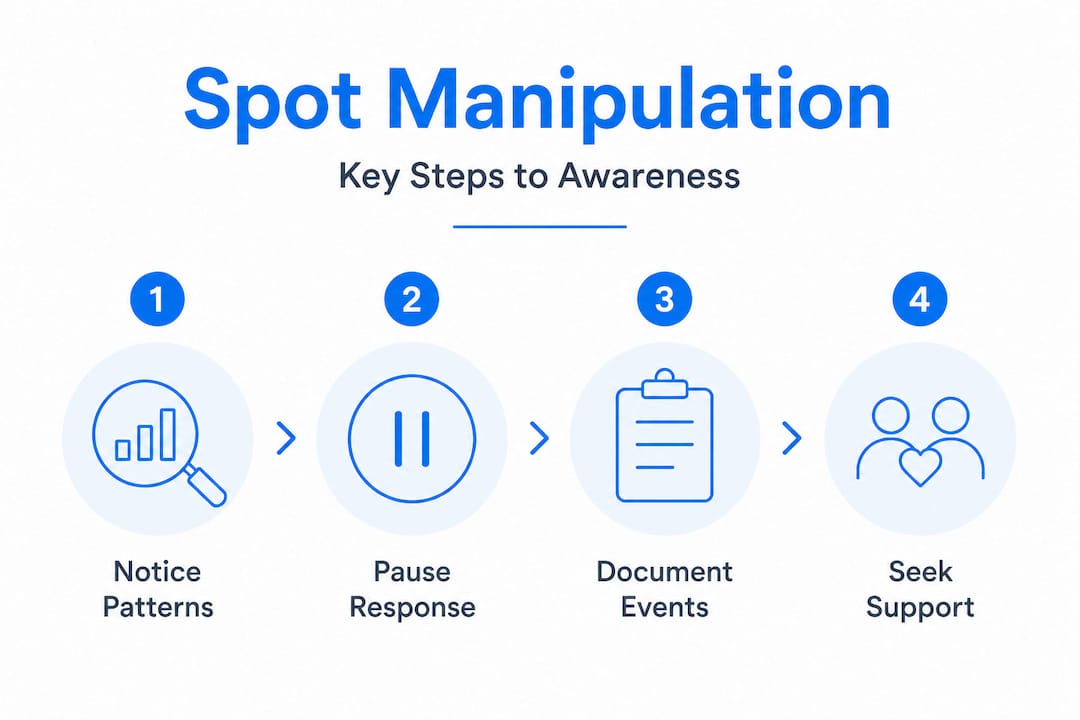
Pro Tip: Keep all co-parenting communication in writing whenever possible. If a conversation happens by phone, follow it up immediately with a written summary sent to your co-parent: "Just confirming our call today, you agreed to X." This creates a paper trail and reduces the chance of your co-parent later denying what was discussed. Written communication also gives you time to respond calmly rather than reactively.
A deeper look: Why prevention and perspective matter most
Here's something most articles about co-parenting conflict won't tell you: confronting a manipulative co-parent almost never works. In fact, it usually makes things worse. When you challenge gaslighting directly, you give the other parent more material to paint you as aggressive or unstable. When you react emotionally to parental alienation, you risk looking like the problem in front of a judge.
The conventional wisdom says to stand up for yourself, document everything, and fight back. But the co-parents who tend to get the best outcomes are the ones who shift their focus entirely to the child's experience, not to winning the conflict with their ex. That reframe is harder than it sounds, but it changes everything.
What we've seen consistently is that calm, consistent documentation, combined with smart communication in custody disputes, does more to protect children than any confrontational approach. When you respond to manipulation with neutrality and keep your records clean, you build a credible narrative over time. Courts notice the parent who shows up organized, calm, and child-focused. They also notice the one who reacts, escalates, and makes every exchange about the conflict between adults.
The subtlety of recurring patterns is something even experienced family law professionals sometimes underestimate. A single incident looks like a bad day. Thirty documented incidents, categorized and timestamped, look like a pattern of behavior. That distinction can change a custody outcome.
Your child doesn't need you to win against your co-parent. They need you to be the stable, present, emotionally regulated parent in their life. Protecting that role, even when it's hard, is the most powerful thing you can do.
Find support with ReplyCalmly
Recognizing manipulation is the first step. Having the right tools to respond to it is what keeps you protected over the long haul.
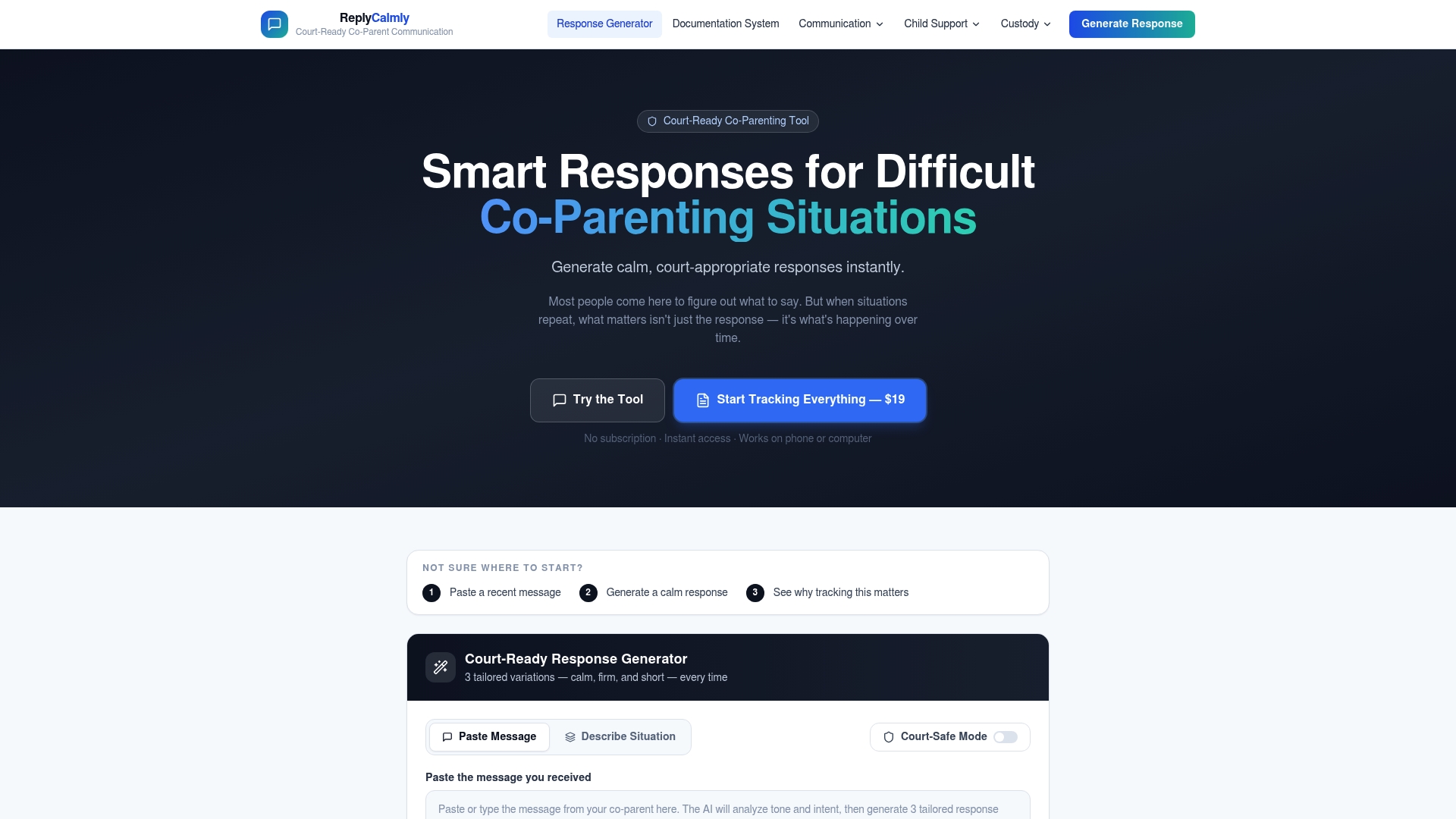
ReplyCalmly is built specifically for co-parents navigating high-conflict custody situations. The platform generates calm, court-appropriate responses to difficult messages so you never have to wonder if your reply will be used against you. It also tracks communication patterns over time, categorizes incidents by type (such as manipulation, false accusations, or custody violations), and visualizes those patterns in a clear dashboard. Whether you're preparing for a custody hearing or simply trying to stay organized, ReplyCalmly gives you smart tools for co-parenting that help you stay composed, documented, and legally protected. Start building your record today.
Frequently asked questions
What are the most common manipulation tactics used by co-parents?
The most common tactics include gaslighting, parental alienation, triangulation, blame shifting, and withholding important information. Nearly 30% of adults report experiencing gaslighting in relationships, making it one of the most widespread forms of manipulation in co-parenting conflicts.
How can I prove my co-parent is manipulating our child?
Keep detailed records of incidents, save all written communications with timestamps, and consult with a therapist or family law attorney familiar with custody documentation. Documentation over confrontation is the approach most likely to protect your child and support your case.
What should I do if I suspect parental alienation?
Act quickly by seeking therapy for your child and obtaining expert legal advice, since early intervention prevents severe alienation and reduces the long-term emotional harm children experience when the pattern is allowed to continue unchecked.
How do courts handle manipulation accusations in custody cases?
Most U.S. courts take manipulation evidence seriously, particularly parental alienation, and courts in 49 states recognize it as grounds for modifying custody arrangements when supported by records and expert testimony.