
Aggressive messages are defined as written communications that use hostility, threats, blame, or manipulation to provoke an emotional reaction. Knowing how to respond to aggressive messages without escalating the conflict is one of the most practical communication skills you can develop, especially in personal relationships where emotions run high. The difference between a reply that defuses tension and one that ignites it often comes down to three things: timing, tone, and intention. Research from Psychology Today, guidance from RAINN, and frameworks from sources like Misread.io all point to the same core truth. You can protect your peace and still communicate clearly, without matching hostility with hostility.
How to respond to aggressive messages: regulate first, reply second
Receiving a hostile message triggers a real physiological response. Your nervous system activates, your heart rate rises, and your thinking narrows. According to Misread.io, emotional activation increases message harshness and impulsivity, meaning the reply you write in that state is almost never the reply you should send.

The solution is not willpower. It is distance and time. Putting your phone face down and stepping away for even three to five minutes begins to lower that activation. Grounding techniques, like pressing your feet into the floor or naming five things you can see, interrupt the stress response faster than most people expect. Breathing exercises, specifically slow exhales that are longer than your inhales, signal your nervous system that the threat has passed.
For sensitive situations, particularly those involving legal matters or co-parenting, waiting 24 hours before replying is not avoidance. It is strategy. A calmer nervous system produces clearer thinking, and clearer thinking produces replies that serve your actual goals rather than your momentary anger.
Pro Tip: Write a full, unfiltered draft of everything you want to say. Then delete it without sending. This venting process releases emotional pressure without causing real-world damage.
Here is a simple regulation sequence to follow before you type a single word:
- Put the phone down immediately after reading the message.
- Take five slow breaths, making each exhale twice as long as the inhale.
- Do a brief grounding exercise to return to the present moment.
- Wait at least three to five minutes before picking up the phone again.
- Ask yourself: "What outcome do I actually want from this reply?"
- Write your response only after you can answer that question calmly.
How do you craft a calm reply that sets clear limits?
The most effective replies to aggressive messages share three qualities: they are short, they are calm, and they are boring. Aggression feeds on reaction. A long, emotional, defensive reply signals that the hostile message worked. A brief, neutral reply signals that it did not.
Keep replies short and calm with one clear boundary sentence and avoid over-explaining to prevent fueling the conflict. That single boundary sentence is the most powerful tool you have. It does not need justification, elaboration, or an apology attached to it. "I am not available to discuss this right now" is a complete reply.
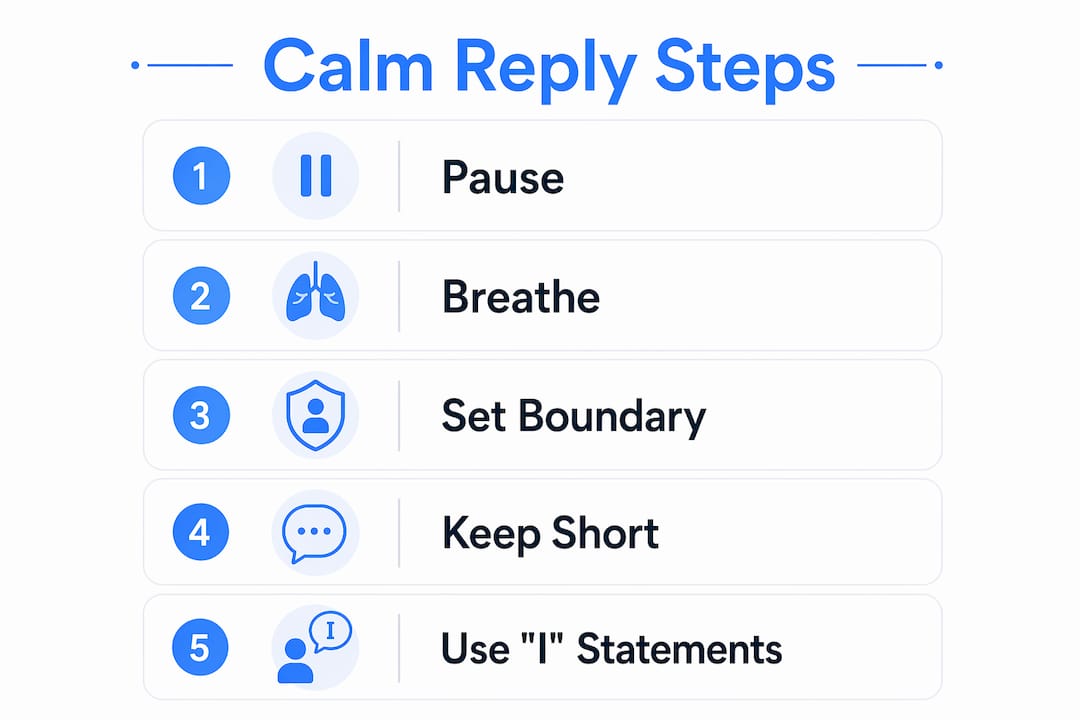
Research published in the Journal of Language Aggression and Conflict confirms that using "I" statements and language modifiers like "could" or "maybe" reduces hostility in responses more effectively than direct confrontation. The goal is not to win the argument. The goal is to lower the temperature of the exchange.
When dealing with aggressive emails specifically, calm replies with courteous language and acknowledgments like "I understand this is frustrating" defuse tension without conceding your position. Moving serious or emotionally charged conversations offline, to a phone call or in-person meeting, also removes the impulsivity that text-based communication encourages.
Pro Tip: Identify the type of message before you reply. Rude messages need a firm boundary. Passive-aggressive messages often need no reply at all. Manipulative messages need a factual, emotionless response that gives nothing to work with.
| Aggressive message | Effective calm reply |
|---|---|
| "You never do anything right. This is your fault." | "I hear that you're frustrated. I'm happy to talk about solutions when we're both calm." |
| "If you don't respond in the next hour, I'm done." | "I'll reply when I'm available. Ultimatums don't change that timeline." |
| "You're being completely unreasonable and selfish." | "I disagree with that. I'm open to a respectful conversation about the issue." |
| "I can't believe you would do this to me." | "I understand you're upset. I'm not going to engage with this message as written." |
What should you do when messages become threatening or harassing?
There is a meaningful difference between a hostile message and a threatening one. Hostile messages are aggressive, unkind, or manipulative. Threatening messages imply harm, safety risks, or legal violations. When messages cross into that territory, the response strategy changes entirely.
"Document everything. Your record of what was said, and when, is often the most important evidence you have."
RAINN recommends that anyone facing threatening or harassing messages document evidence, disengage immediately, and create a safety plan that includes trusted contacts and safe locations. This is not an overreaction. It is a practical framework for protecting yourself when communication has moved beyond conflict into danger.
Here are the steps to take when messages escalate to harassment or threats:
- Screenshot every threatening message with the date and time visible.
- Stop responding entirely. Engagement gives the sender information and encouragement.
- Tell a trusted person, whether a friend, family member, or counselor, what is happening.
- Contact the National Domestic Violence Hotline at 1-800-799-7233 if you feel unsafe.
- Block or mute the sender on all platforms where contact is occurring.
- Report the messages to the platform, your employer if relevant, or local authorities.
- Consult a legal professional if the harassment is ongoing or involves co-parenting disputes.
For co-parents specifically, handling harassment through documented channels rather than informal texts creates a paper trail that courts can evaluate. That documentation is not just protective. It is often decisive.
Common mistakes that make aggressive messages worse
Most people instinctively do the exact things that escalate conflict when they receive a hostile message. Recognizing these patterns is the first step to breaking them.
- Replying immediately. Responding while emotionally activated almost always produces a reply you will regret. The cognitive-behavioral framing from Psychology Today frames this as "taking the bait," and the antidote is refusing to engage on the sender's timeline.
- Over-explaining or defending yourself. A three-paragraph defense of your character tells the other person their attack landed. One calm sentence is more powerful than ten defensive ones.
- Matching aggression with aggression. Writing in anger almost always keeps conflict going, while non-hostile tones increase the odds of a calmer exchange. Responding with sarcasm or hostility hands the other person exactly what they wanted.
- Continuing to engage when respect is gone. If someone has ignored your stated limits repeatedly, continuing to reply rewards that behavior. Disengaging is not weakness. It is a boundary in action.
- Ignoring available tools. Platforms and apps designed for managing difficult communications exist precisely because these situations are hard to navigate alone. Using structured support is not a sign of failure.
The shift that changes everything is reframing your goal. Changing the goal from "winning" the exchange to maintaining your peace produces fundamentally different responses, and fundamentally different outcomes.
Key takeaways
Responding to aggressive messages effectively requires pausing before replying, using short boundary-setting language, and escalating to safety resources when messages become threatening.
| Point | Details |
|---|---|
| Regulate before replying | Wait at least three to five minutes and use breathing or grounding before typing a response. |
| Keep replies short and calm | One clear boundary sentence without over-explaining is more effective than a long defense. |
| Use "I" statements | Non-confrontational language with modifiers like "could" reduces hostility better than direct pushback. |
| Document threats immediately | Screenshot threatening messages with timestamps and disengage before contacting authorities or legal support. |
| Avoid common escalation mistakes | Never reply while activated, match aggression, or over-defend. Reframe your goal as protecting peace. |
Why protecting your peace matters more than winning the argument
I have watched people spend hours crafting the perfect reply to a hostile message, one that is airtight, logical, and completely justified. And almost every time, it makes things worse. The other person does not read it and think, "You're right, I was wrong." They read it and find three new things to attack.
The uncomfortable truth I have come to accept is this: you cannot logic your way out of someone else's aggression. You can only control your own response, and that control is where your actual power lives. The moment you stop trying to win and start trying to stay grounded, the entire dynamic shifts. Not always immediately, and not always visibly. But it shifts.
What I have found actually works is the delay. Not because waiting makes you passive, but because it gives you back your own voice. A reply written from a calm place sounds completely different from one written in the heat of the moment, and it lands differently too. The firm but calm response is not a compromise. It is the most assertive thing you can do, because it refuses to be pulled off course.
Self-compassion matters here too. You are going to get it wrong sometimes. You will reply too fast, or say something you regret, or let someone get under your skin. That is human. What matters is that you keep returning to the practice of pausing, regulating, and choosing your words with intention. That consistency, over time, is what actually changes the pattern.
— Devin
How Replycalmly helps you respond without the stress
Knowing what to do and actually doing it in the middle of a heated exchange are two very different things. That gap is exactly what Replycalmly is built to close.
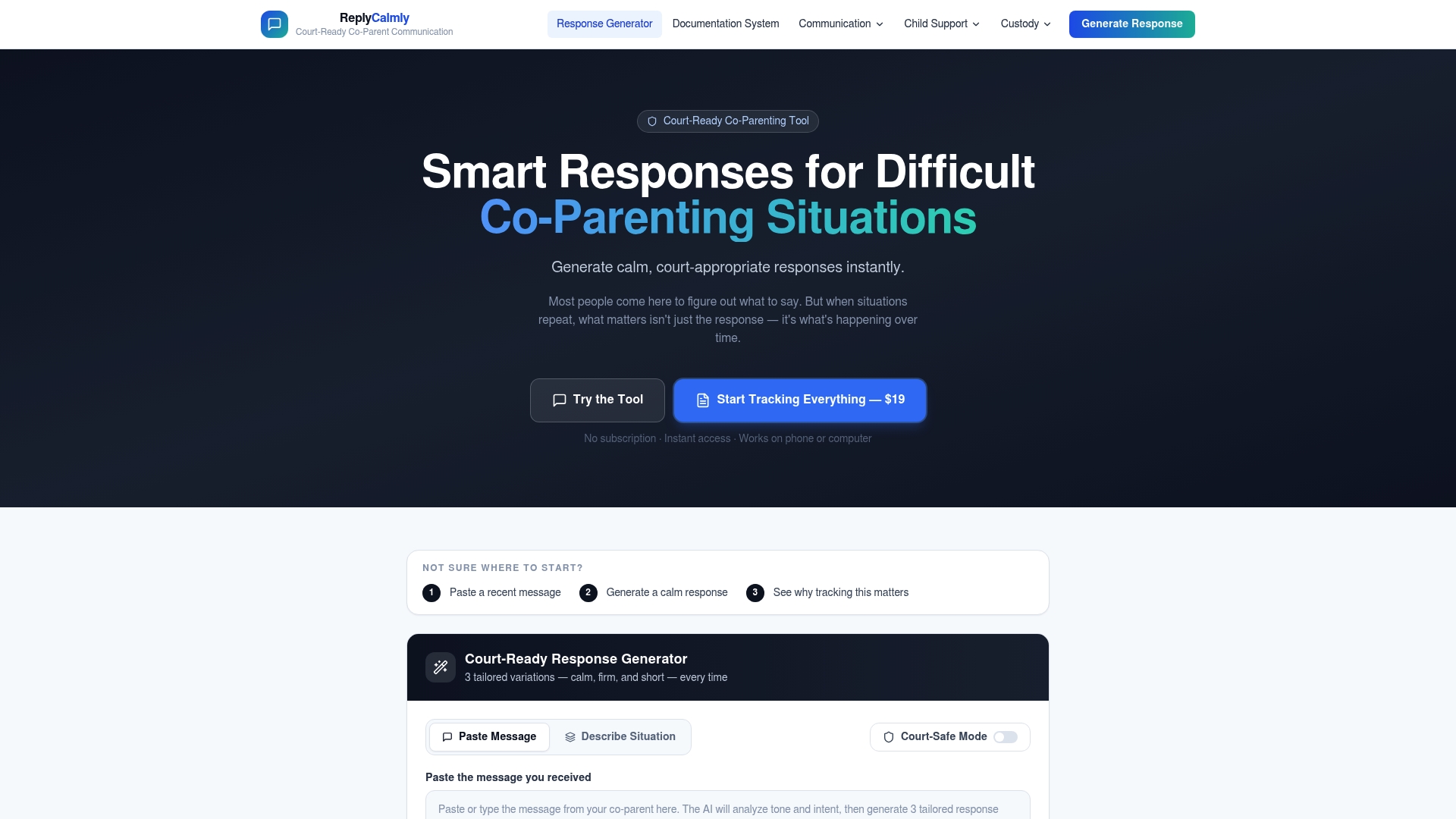
Replycalmly's co-parent response generator takes the message you received and produces multiple reply options: calm, firm, and short. You do not have to figure out the right words while your nervous system is in overdrive. The platform also includes an evidence log that tracks communication patterns over time, which is particularly valuable when hostile messages are part of a larger pattern in a custody or family court situation. If you are dealing with aggressive communications in a co-parenting context, Replycalmly gives you the structure and language to respond professionally, every time.
FAQ
What is the best first step when you receive an aggressive message?
Put the phone down immediately and wait at least three to five minutes before reading it again. Physical and temporal distance from the message lowers emotional activation and improves the quality of your response.
How short should a reply to a hostile message be?
One to three sentences is the target. A single clear boundary statement, delivered calmly and without over-explanation, is more effective than a lengthy defense and gives the sender less material to escalate with.
When should you stop replying to aggressive messages entirely?
Stop replying when messages become threatening, when the sender repeatedly ignores your stated limits, or when continued engagement is making the situation worse rather than better. Document everything before disengaging.
Do "I" statements really work in conflict communication?
Research published in the Journal of Language Aggression and Conflict confirms that "I" statements and softening language like "could" or "maybe" reduce hostility more effectively than direct confrontation, making them a practical tool for de-escalation.
Is it ever okay to ignore an aggressive message completely?
Passive-aggressive messages, in particular, often require no reply at all. Silence removes the reaction the sender is seeking and can be the most effective boundary you set.