
Reasonable communication in co-parenting is defined as clear, respectful, timely, and child-centered exchange that allows both parents to manage their shared responsibilities without requiring personal harmony. The term used in family law and co-parenting guidance is "child-focused communication," and it sets a practical standard: you do not have to like your co-parent to communicate effectively with them. What courts, counselors, and co-parenting frameworks all agree on is this. The goal is not friendship. The goal is a functioning parenting plan that protects your child.
What does reasonable communication look like in practice?
Reasonable communication between co-parents is respectful and clear enough to let the parenting plan function effectively. That definition is deceptively simple. In practice, it means every message you send should pass a basic test: Is this about my child? Is it factual? Is it neutral in tone?
Reasonable communication examples include:
- Sending a brief message about a school schedule change with the date, time, and a clear request for confirmation
- Notifying the other parent of a medical appointment with the doctor's name, location, and what follow-up is needed
- Asking about a holiday schedule swap with specific dates and a deadline for a response
- Sharing a teacher's feedback about homework without adding commentary about the other parent's parenting
What makes communication reasonable is not just the content. Tone carries enormous weight. Sarcasm, insults, and passive-aggressive phrasing all signal to a court that you are not cooperating in good faith. Washington State family court guidance specifically advises parents to use neutral, factual language and focus on solutions rather than grievances.
One-channel communication is a practical rule that reduces confusion. Pick one platform, whether email, a co-parenting app, or a court-mandated tool, and stick to it for all non-emergency matters. This creates a clear record and prevents the chaos of scattered text threads, voicemails, and emails that contradict each other.

Pro Tip: Before you send any message, read it aloud and ask: "Would I be comfortable if a judge read this?" If the answer is no, rewrite it.
How do legal requirements shape reasonable communication?
Courts do not leave "reasonable communication" undefined. Legal rules like Illinois Rule 1.4 require parties to keep each other reasonably informed and to respond promptly to reasonable information requests. That legal-ethics baseline translates directly into co-parenting expectations: delayed responses and withheld information are not neutral acts. They can be treated as violations.
Many courts now mandate specific platforms for co-parent communication. Nevada courts require communication through designated co-parenting apps for non-emergency matters, with strict rules on timing and documentation. Platforms like OurFamilyWizard and TalkingParents create timestamped, unalterable records that judges can access directly. That accountability changes how both parents write their messages.
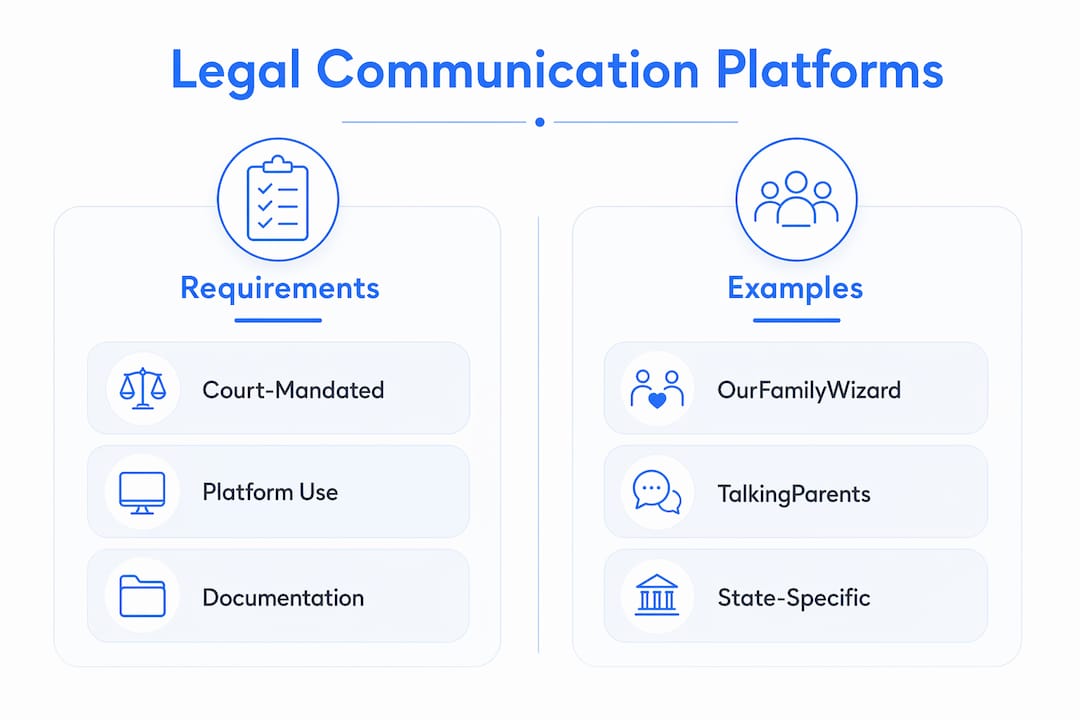
The table below shows how common legal standards vary across states.
| State | Common requirement | Platform examples | Key rule |
|---|---|---|---|
| Nevada | Court-mandated app for non-emergency contact | OurFamilyWizard, TalkingParents | Timestamped, unalterable records |
| Illinois | Timely updates and prompt responses | Email or approved app | Rule 1.4 compliance |
| Washington | Child-focused, neutral language | Any documented channel | Solution-focused messaging |
| Utah | Structured protocols and response timelines | Co-parenting apps or email | Predictable routines reduce conflict |
Violations of court-ordered communication rules carry real consequences. Contempt findings, sanctions, and negative custody evaluations are all possible outcomes when a parent ignores or abuses the designated channel. Courts read communication records closely, and a pattern of hostile or evasive messages tells a story.
Pro Tip: If your court order specifies a platform like OurFamilyWizard, use it exclusively for all non-emergency messages. Texting outside the platform, even for convenience, can be used against you.
What common pitfalls make communication unreasonable?
The quickest way co-parent communication turns toxic is when it veers into blame, personal history, or attacks instead of child-related concerns. Most co-parents know this in theory. The hard part is catching yourself in the moment when emotions run high.
The most common pitfalls include:
- Using children as messengers. Sending verbal messages through your child puts them in an impossible position and is flagged negatively in custody evaluations.
- Long emotional messages. A wall of text rehashing old grievances does not resolve anything. It creates a paper trail that works against you.
- Ignoring or delaying responses. Silence is not neutral. Courts interpret consistent non-responses as obstruction.
- Mixing personal disputes with parenting topics. One message should cover one topic. Combining a schedule request with a complaint about child support signals you cannot separate the two.
- Passive-aggressive phrasing. Phrases like "as usual" or "if you actually cared" are not neutral. They escalate conflict and undermine your credibility.
Texting often serves as notification only and is insufficient for the two-way communication needed to build mutual understanding. Psychology Today notes that genuine communication involves listening and reflecting, not just sending brief notifications. When you rely entirely on texts, you lose context, tone, and the ability to confirm understanding. Misinterpretations pile up fast.
Using children as messengers, insults, or sarcasm quickly turns communication unreasonable and counterproductive. The child pays the price for every message they are forced to carry between parents.
What strategies and tools help co-parents communicate effectively?
The BIFF method is the most widely recommended framework for co-parent messaging. BIFF stands for Brief, Informative, Friendly, and Firm. Each element serves a specific purpose.
- Brief. Keep the message short. One topic per message. Three to five sentences is usually enough.
- Informative. State the facts clearly. Include dates, times, names, and any relevant details without editorializing.
- Friendly. Neutral is the floor. A polite opener like "I hope this finds you well" costs nothing and sets a cooperative tone.
- Firm. State your request clearly. Include a deadline and, where possible, offer two options so the other parent can respond without feeling cornered.
A BIFF message about a schedule change looks like this: "Hi. I need to adjust the pickup time on Saturday, march 14. I have a work commitment until 4 p.m. Can we move pickup to 4:30 p.m. or 5 p.m.? Please let me know by Wednesday." That message is complete, neutral, and leaves no room for misinterpretation.
Dedicated co-parenting apps go beyond messaging. Tools like OurFamilyWizard include shared calendars, expense tracking, and message logs. Unalterable records of co-parent communications are court admissible and influence case outcomes. Knowing that every message is logged changes the tone of the conversation for both parents.
Structured, predictable routines reduce ambiguity and court interventions more than attempting to debate disagreements in real time. Utah co-parenting guidance recommends building response time expectations directly into the parenting plan. For example, specifying that non-emergency messages receive a response within 24 hours removes the ambiguity that leads to conflict.
The table below shows how different communication tools compare for co-parenting use.
| Tool | Best use | Documentation | Court admissible |
|---|---|---|---|
| OurFamilyWizard | Full co-parenting management | Yes, timestamped | Yes |
| TalkingParents | Message logging and records | Yes, unalterable | Yes |
| General communication | Yes, with screenshots | Yes, with verification | |
| Standard texting | Quick notifications only | Limited | Requires export |
Pro Tip: Treat every message you send as potential court evidence. That single mindset shift improves clarity, neutrality, and documentation without any extra effort.
For co-parents managing high-conflict situations, structured templates and response generators can reduce the emotional labor of drafting every message from scratch.
Key Takeaways
Reasonable co-parenting communication is child-focused, documented, and structured around clear frameworks like BIFF, not personal feelings or past grievances.
| Point | Details |
|---|---|
| Define it clearly | Reasonable communication is child-centered, neutral in tone, and timely in response. |
| Use the BIFF method | Keep messages Brief, Informative, Friendly, and Firm to reduce conflict and misinterpretation. |
| Follow court requirements | Many states mandate specific platforms like OurFamilyWizard with timestamped, unalterable records. |
| Avoid common pitfalls | Never use children as messengers, send emotional walls of text, or mix personal disputes with parenting topics. |
| Document everything | Treat all messages as potential court evidence and use dedicated apps to maintain admissible records. |
What I have learned about tone and structure in co-parenting
After working with co-parents navigating some of the most contentious custody situations imaginable, one thing stands out above everything else. The parents who communicate most effectively are not the ones who feel the least anger. They are the ones who have accepted that communication is a skill, not a mood.
Most people approach a difficult message by asking, "How do I feel about this?" The better question is, "What does my child need me to say right now?" That shift is small in theory and enormous in practice. When you write from your child's needs instead of your own frustration, the message changes completely.
Structure is not a constraint. It is protection. The BIFF framework, dedicated apps, and documented channels do not limit what you can say. They protect you from saying things that will hurt your case, your child, and your own credibility. I have seen parents lose custody evaluations not because of what they did, but because of how they wrote about it.
If communication has broken down completely, parallel parenting is a legitimate and court-recognized alternative. It minimizes direct contact while keeping the parenting plan functional. And if you are facing repeated violations or escalating hostility, consult a family law attorney. Documentation is your strongest asset in that conversation.
— Devin
How Replycalmly helps you communicate with confidence
Co-parenting communication does not have to feel like walking a tightrope every time you open your phone. Replycalmly is built specifically for parents who need to respond clearly and calmly to difficult messages without spending an hour drafting and second-guessing every word.
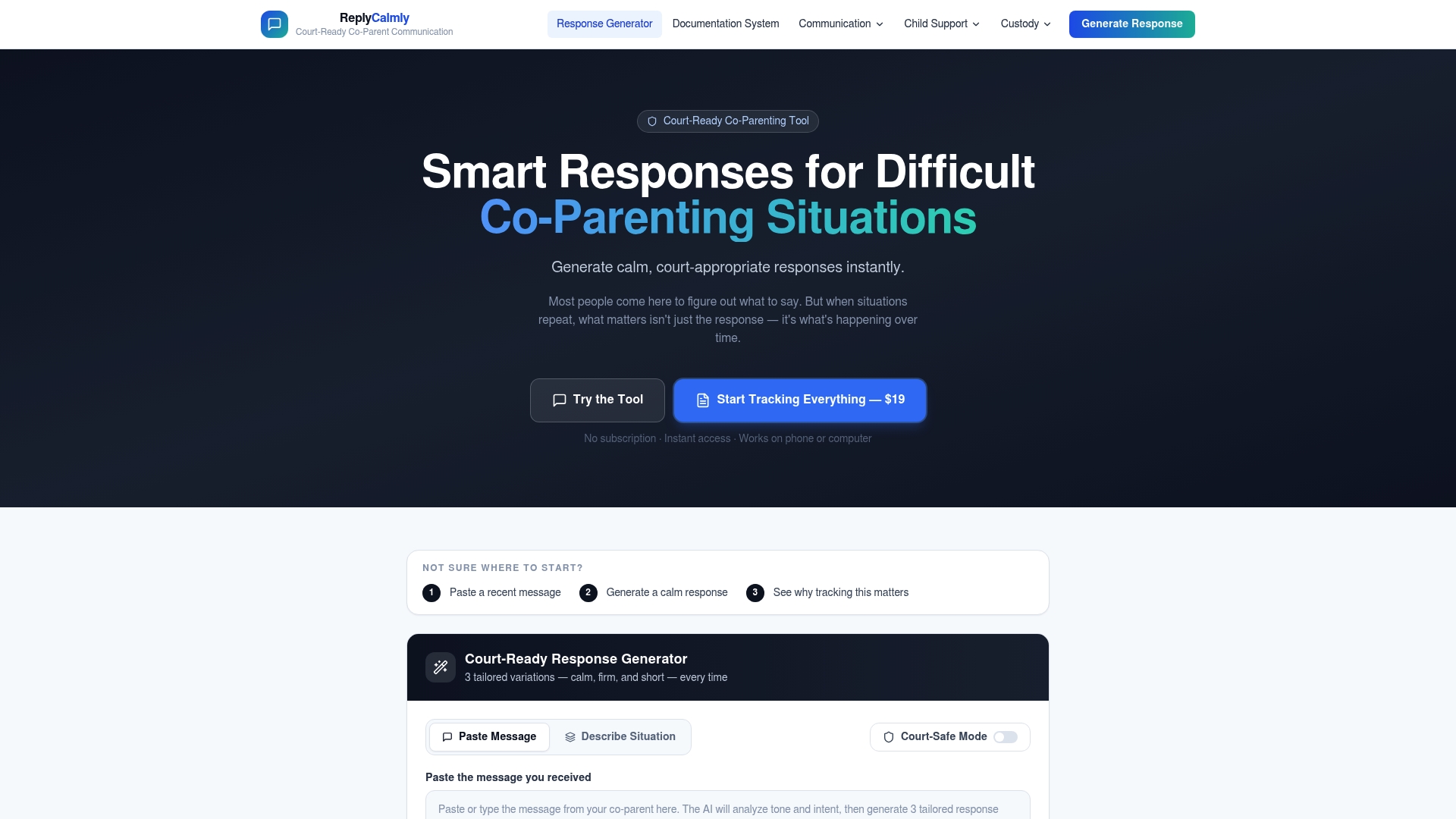
The platform's response generator produces calm, firm, and short variations for any message you receive, so you always have a court-appropriate option ready. Replycalmly also tracks communication patterns over time, categorizes incidents, and builds a visual record you can use if the situation escalates legally. For parents who need guidance on which tools to use, the best co-parenting apps for documentation guide covers the top platforms with honest comparisons. Replycalmly works alongside tools like OurFamilyWizard, not instead of them.
FAQ
What is reasonable communication between co-parents?
Reasonable communication is clear, respectful, and child-focused exchange that allows the parenting plan to function without requiring personal harmony. It uses neutral language, stays on topic, and responds in a timely manner.
What is the BIFF method for co-parenting?
BIFF stands for Brief, Informative, Friendly, and Firm. It is a messaging framework that keeps co-parent messages short, factual, and free of emotional escalation.
Can a court require a specific communication platform?
Yes. Courts in states like Nevada mandate platforms such as OurFamilyWizard or TalkingParents for non-emergency communication. These platforms create timestamped, unalterable records that judges can review directly.
What makes communication unreasonable in a custody case?
Using children as messengers, sending hostile or sarcastic messages, ignoring requests, and mixing personal grievances with parenting topics all qualify as unreasonable communication in most family courts.
How does documenting messages help in a custody case?
Unalterable communication records are court admissible and directly influence custody decisions. Consistent documentation of your own reasonable communication and the other parent's violations builds a credible legal record over time.