
A family court communication checklist is a structured tool that helps co-parents document custody interactions clearly, stay legally protected, and keep every message focused on their child's wellbeing. Courts treat co-parent messages as evidence. According to attorney Cassidy P. Eason, communication records are used to judge cooperation and parenting ability directly. That means every text, email, and exchange log you create is part of your case. This guide covers the core elements of an effective checklist, from communication logs and message etiquette to custody exchange protocols and technology tools, so you can prepare for family court with confidence.
1. What belongs in a family court communication checklist?
A complete family court communication checklist covers four categories: scheduling, decision logging, message conduct, and documentation habits. Each category serves a different legal purpose, but all four work together to show the court a consistent, child-focused parent.
Scheduling records include your custody calendar, confirmed exchange times and locations, and any backup communication methods you have agreed on. Confirming exchanges 48 hours before they happen creates a paper trail that protects you if the other parent claims a miscommunication. Decision logging captures the date, a brief summary, and the outcome of every significant parenting decision, from school enrollment to medical treatment.

Message conduct rules define how you write and send communications. The standard is simple: send only messages you would want a judge to read. Documentation habits tie everything together by setting a schedule for backing up your records and organizing them so an attorney can find what they need quickly.
2. How to build a communication log courts will respect
Courts may discount editable spreadsheets as evidence because they can be altered after the fact. Time-stamped, tamper-evident digital records are the standard courts prefer. That distinction matters more than most parents realize until it is too late.
A court-ready communication log includes:
- Date and time of every message sent or received
- Topic category such as schedule change, medical decision, or expense request
- Summary of the exchange and any agreed outcome
- Attachments or screenshots stored alongside the log entry
- Monthly cloud backup to prevent data loss and allow easy sharing with your attorney
Organize entries chronologically and tag them with searchable keywords like "school," "medical," or "violation." That structure lets you pull relevant records fast when your attorney needs them. Learn more about how to document co-parenting issues step by step.
Pro Tip: Never rely on a shared Google Sheet for your official log. Use a platform with an audit trail that shows when entries were created and whether they were modified.
3. How to communicate neutrally to reduce conflict
Child-focused, factual messaging significantly reduces conflict and makes documentation easier for court use. The goal is not to win an argument in a text thread. The goal is to show a judge that you are the cooperative parent.
Use this five-part message structure for every non-urgent communication:
- Topic: State what the message is about in one line.
- Facts: Include only relevant, verifiable information.
- Request: Make one clear ask, not multiple demands.
- Options: Offer two reasonable alternatives when possible.
- Deadline: State when you need a response.
Limit yourself to one reply per day on non-urgent matters. Responding to every provocation in real time creates a long, emotional thread that works against you. Written communication is the only format you should use for regular co-parenting interactions because it creates a clear, dated record.
Pro Tip: Before sending any message, run two checks: a spelling check and an emotion check. If the message sounds angry, defensive, or sarcastic, rewrite it before hitting send.
4. What a custody exchange checklist should include
Custody exchanges are the moments most likely to escalate into conflict, and they are also the moments courts hear about most often. A solid exchange checklist protects your child and your case at the same time.
Documents to bring:
- Current custody schedule
- School ID and health insurance card
- Medication authorization forms
Child essentials:
- Medications with written dosage instructions
- Comfort items for younger children
- Homework, activity gear, and weather-appropriate clothing
Handoff protocols matter as much as the physical items. Recommended handoff length is about five minutes. Arrive on time, use a neutral location when possible, and keep the interaction brief and positive. Never discuss adult disputes in front of your child. After the exchange, send a short text confirming safe arrival and note any immediate concerns calmly and factually.
Pro Tip: If you anticipate disputes about what was or was not exchanged, take timestamped photos of the items you are handing over. A photo takes ten seconds and can resolve a disagreement that would otherwise take hours in court.
5. How technology tools support your communication checklist
Digital tools do more than store messages. They create the kind of structured, time-stamped record that holds up when a judge reviews months of communication history. Courts examine communications in custody disputes carefully, and the format of your records affects how credible they appear.
Platforms like Honeydew and Replycalmly offer features built specifically for co-parents in disputes:
- Message archiving with timestamps that cannot be edited after the fact
- Shared custody calendars that log changes and confirmations automatically
- Incident tracking that categorizes issues by type, such as custody violations or false accusations
- Exportable records formatted for attorney or mediator review
Cloud backups prevent accidental data loss and make it easy to share records without handing over your entire device. Replycalmly also integrates with court-mandated tools like OurFamilyWizard, adding a documentation layer without replacing the systems a judge has already ordered you to use. For a comparison of co-parenting apps for documentation, Replycalmly's resource page covers the leading options.
Pro Tip: Choose apps with clear audit trails and exportable records. If you cannot produce a clean PDF of your communication history for your attorney, the app is not court-ready.
6. The dos and don'ts of family court communication
Refusing reasonable communication or using inflammatory language harms your court position directly. Attorney Anna M. Vujovic identifies these behaviors as among the most damaging things a parent can do during a custody dispute. The rules below are not suggestions. They are the baseline for protecting your case.
Do:
- Communicate only child-related, factual information
- Keep tone neutral and professional in every message
- Document all communications as part of your co-parenting evidence log
- Share important information about your child's health, school, and safety promptly
- Stick to one communication channel to keep your record clean
Don't:
- Delete messages, posts, or emails once litigation has started or is anticipated
- Use blame, insults, or emotionally charged language
- Withhold information that affects your child's welfare
- Respond to every provocation. Silence is often the strongest legal move.
- Engage in late-night or high-emotion exchanges
"Think before you post, type, or speak. Courts examine all of it."
Deleting messages does not hide evidence. Forensic technology can recover deleted texts, emails, and social media content. Deleting during or before litigation can result in sanctions for spoliation, which is the legal term for destroying evidence. Preserve everything, even messages that make you look bad, because selective deletion looks worse.
Key takeaways
Effective co-parent communication requires child-focused messages, tamper-evident logs, and consistent documentation habits that hold up under court review.
| Point | Details |
|---|---|
| Build a court-ready log | Use time-stamped, tamper-evident records organized chronologically with searchable keywords. |
| Structure every message | Follow the five-part format: topic, facts, request, options, and deadline. |
| Prepare for every exchange | Bring required documents, keep handoffs to five minutes, and confirm safe arrival by text. |
| Use the right technology | Choose apps with audit trails and exportable records, not editable spreadsheets. |
| Never delete messages | Deleting communications during litigation can result in legal sanctions for spoliation. |
What I have learned from watching co-parents navigate family court
The parents who do best in custody disputes are rarely the ones with the most dramatic evidence. They are the ones with the most organized, consistent, and boring communication records. A log full of calm, child-focused messages tells a judge exactly what kind of parent you are without you saying a word.
The hardest part is not knowing what to document. Most parents figure that out quickly. The hard part is staying disciplined when the other parent sends a message designed to provoke you. I have seen parents with strong cases weaken their position significantly by firing back with one emotional reply. That reply becomes exhibit A.
Structured checklists solve this problem because they shift your focus from reacting to recording. When your job is to document the exchange rather than win it, you naturally write calmer messages. You think about how the message reads to a third party. You stop trying to be right and start building a record that speaks for itself.
The other thing I would tell any parent in this situation: do not wait until things escalate to start documenting. Communication logs in custody cases are most powerful when they show a long, consistent pattern, not just a few weeks of careful behavior before a hearing. Start now, stay consistent, and let the record do the work.
— Devin
Replycalmly tools that support your communication checklist
Co-parents who want practical help putting this checklist into action have a direct path forward with Replycalmly.
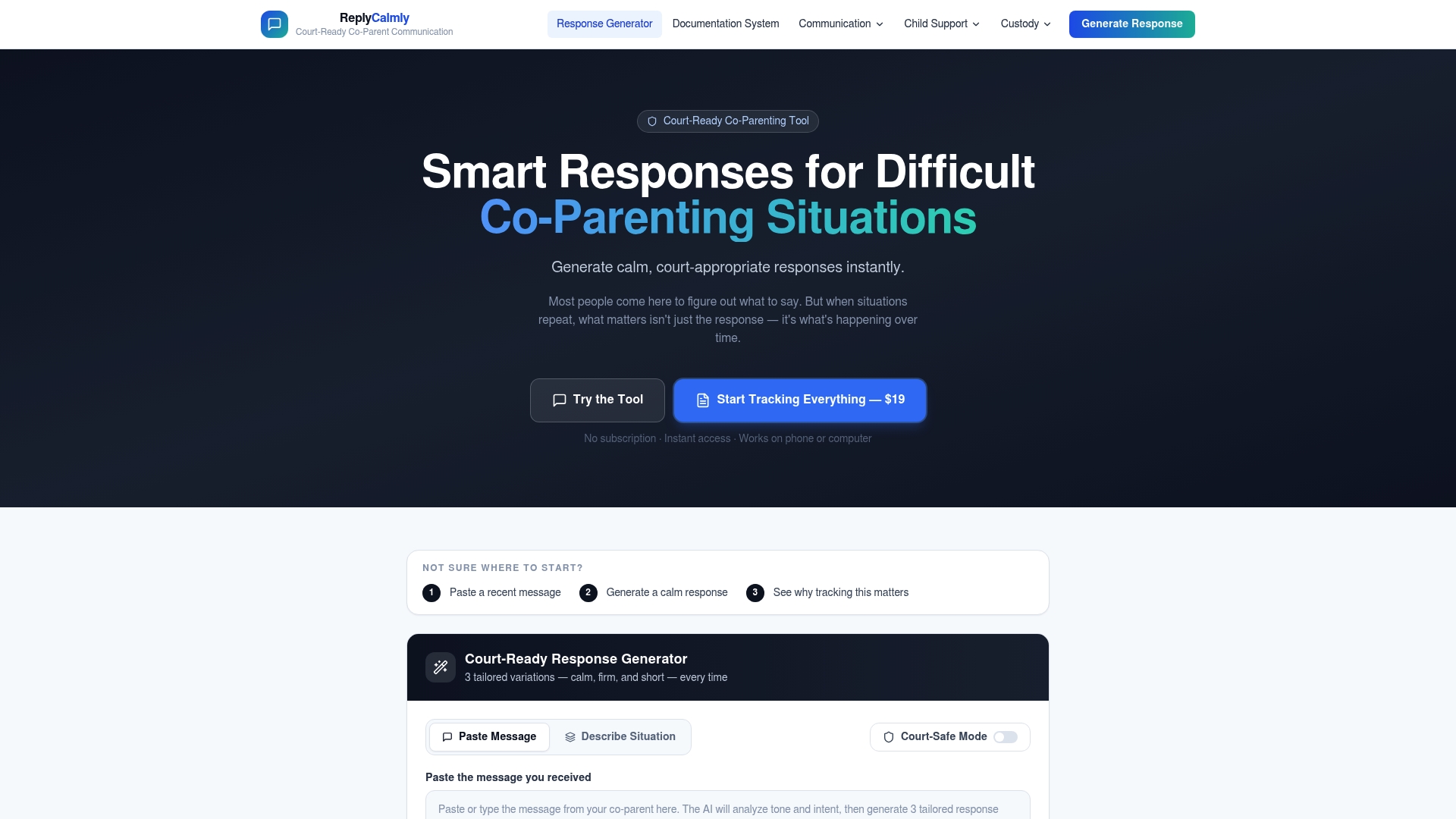
Replycalmly's response generator produces calm, firm, and short reply options for difficult messages, so you never have to figure out the right tone under pressure. The platform's incident tracking system logs and categorizes issues over time, giving you a dashboard view of patterns that matter in court. For parents who want a ready-made structure, the co-parenting documentation template provides a court-formatted system for $19. Replycalmly also integrates with OurFamilyWizard, so your existing court-ordered tools and your documentation layer work together without conflict.
FAQ
What is a family court communication checklist?
A family court communication checklist is a structured guide that helps co-parents document custody interactions, manage message tone, and organize evidence for court review. It covers communication logs, exchange protocols, and message conduct rules.
How should I communicate with a co-parent during a custody dispute?
Keep every message child-focused, factual, and neutral. Use written communication only, follow a clear message structure, and review each message as if a judge will read it before you send it.
Can deleted messages be used against me in family court?
Deleting messages during or before litigation can result in spoliation sanctions. Courts and forensic technology can recover deleted texts, emails, and social media content, so preserving all communications is critical.
What apps help with co-parenting communication logs?
Platforms like Honeydew and Replycalmly offer time-stamped message archiving, shared custody calendars, and exportable records designed for family court use. Choose apps with clear audit trails over editable spreadsheets.
How long should a custody exchange take?
The recommended handoff length is about five minutes. Keep the interaction brief, positive, and free of adult disputes, then confirm safe arrival by text immediately after.