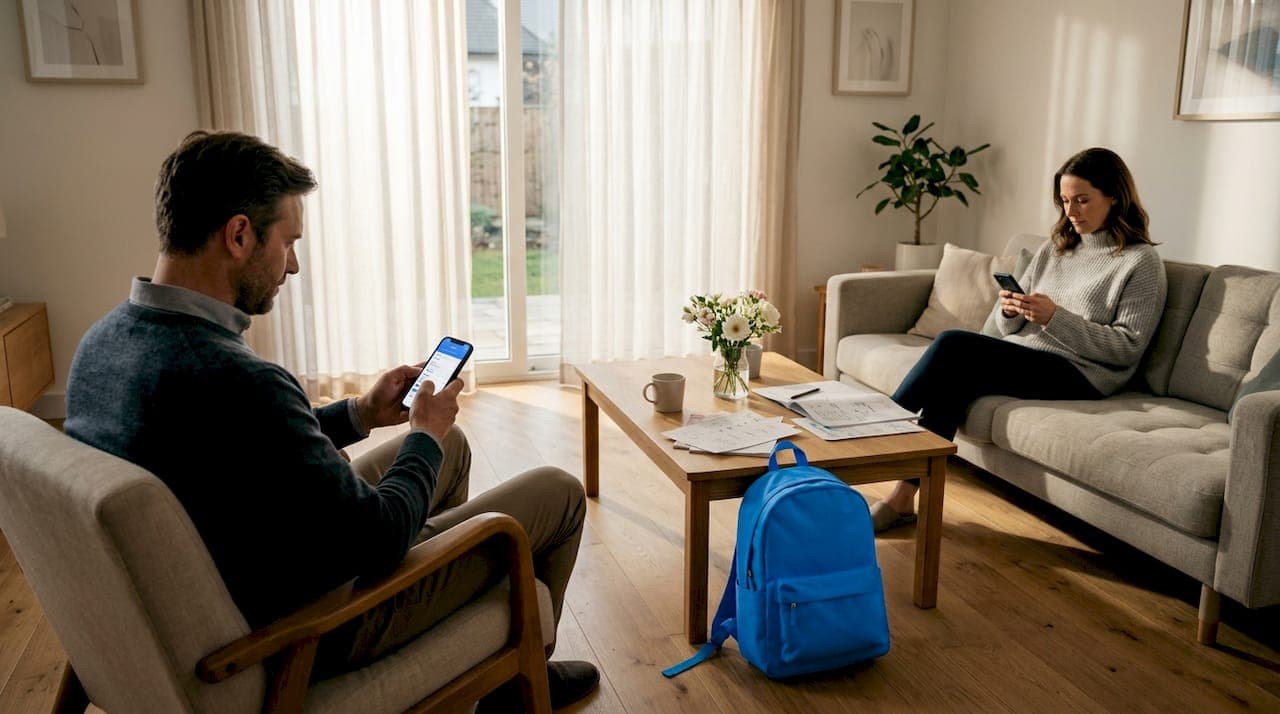
When you get a hostile text from your co-parent at 9 PM, your first instinct is to fire back. That reaction is human. But it's also one of the most damaging things you can do for your children, your case, and your own mental health. Understanding why use calm responses in these moments isn't just reassuring. It's the first step toward actually changing what happens next. This guide breaks down the science, the psychology, and the practical strategies behind calm responses so you can use them with confidence, not just good intentions.
Table of Contents
- Key takeaways
- Why calm responses matter for your children
- The psychology behind calm responses
- Practical techniques for calmer co-parenting exchanges
- Calm responses vs. reactive responses: what actually changes
- What the research tells us about long-term benefits
- My take on what really changes when you go calm
- Tools to help you respond calmly, every time
- FAQ
Key takeaways
| Point | Details |
|---|---|
| Children feel the effects | Even low-level conflict affects your child's emotional security, making calm responses a child protection strategy. |
| Pause before you respond | A deliberate 60 to 90 second pause reduces impulsive reactions and gives you control over your reply. |
| Reappraisal beats rumination | Parents who reframe situations emotionally fare better in closeness with their children over time. |
| Brief messages reduce risk | Keeping messages short and child-focused prevents tone misreads and defensive spirals. |
| Tools reinforce consistency | Structured communication apps and response templates help you stay calm even when you feel anything but. |
Why calm responses matter for your children
The case for calm responses starts with your kids, not with you. Destructive interparental conflict increases child emotional insecurity far more strongly than constructive conflict, based on data from over 4,400 low-income couples. The study also found that fathers who experience depression symptoms as a result of conflict pass those effects on to children. Conflict at home is not just an adult problem.
Here is what makes this finding so significant for co-parents: your child does not need to witness a screaming match to be harmed. Even tension they sense at pickup, in a text message read aloud, or in your tone of voice after a difficult exchange registers in their nervous system. Children experience emotional insecurity even during constructive conflict, meaning calm responses reduce threat perception beyond just avoiding hostility.
Research on parenting interventions shows that programs targeting interparental conflict reduce conflict and improve child adjustment, particularly in group formats. The pattern across studies is consistent: when parents communicate with less heat, children show measurably better behavior and emotional outcomes.
"Calm responses are not about being passive or suppressing what you feel. They are about choosing what your child experiences instead of what your anger demands."
The benefits of calm communication extend to you as well. Parents who manage conflict with lower emotional reactivity report fewer depressive symptoms, better sleep, and a stronger sense of control over their parenting. That is a return worth working for.
The psychology behind calm responses
Knowing you should respond calmly and actually doing it are two very different things. The gap between them is emotional regulation. Understanding how that works in practice gives you something you can actually use.

The most practical starting point is what researchers call the "90-Second Rule." A deliberate pause of 60 to 90 seconds before responding reduces impulsive, emotional reactions by allowing the initial neurological arousal to pass. When a message makes your chest tight and your fingers ready to type, that physical surge typically peaks and subsides within 90 seconds if you don't feed it. You cannot think clearly or communicate effectively during that surge. Waiting is not weakness. It is strategy.
Beyond the pause, the style of emotion regulation you practice makes a significant difference. A longitudinal study of 1,046 U.S. parents found that parents who use reappraisal, meaning they consciously reframe a situation before reacting, had lower exhaustion, better parent-child relationship closeness, and children with fewer internalizing problems over four months. Rumination, the opposite pattern, produced worse outcomes across the board.
How you phrase your responses matters just as much as your emotional state when you write them. Consider this sequence:
- Acknowledge what you heard. Phrases like "What I'm hearing is..." lower defensiveness and signal that you are listening, not loading up a counter-attack.
- Stick to observable facts. Describe what happened without attaching motive or blame. "The pickup was at 4 PM per the order" lands differently than "You're always late on purpose."
- State what you need, not what they did wrong. Assertive communication creates emotional safety in conflict by replacing accusation with a clear request.
- Invite a response. Ending with an open question or a proposed solution reduces the chance that the conversation dead-ends in hostility.
Pro Tip: Write your first draft, then remove anything that references the other parent's character or motives. What remains is almost always your actual message, and it will land far better.
Practical techniques for calmer co-parenting exchanges
Knowing the theory is useful. Having a set of techniques you can deploy in the moment is what actually changes your communication patterns. Here are the strategies that work for high-conflict co-parenting specifically.
Use the pause deliberately. Set a personal rule: never respond to a difficult message within the first 15 minutes. Experts recommend pausing interactions 15 minutes or more, with an agreed return time to reduce escalation. If you and your co-parent can establish this as a mutual norm, even better. If not, hold it yourself. The other parent's urgency is not always real urgency.
Keep your messages short and child-focused. Six months of co-parent texting data shows that brief, child-centered messages prevent tone misreads and defensive spirals, especially in text format. A message like "Can we confirm Tuesday drop-off at 3 PM?" gives your co-parent nothing to escalate. A message that explains your reasoning, defends your position, and adds context gives them five things to argue about.
Use structured communication tools. Co-parenting apps create emotional regulation through system design, not willpower. When your communication runs through a platform built for co-parenting, tone is neutralized, messages are documented, and the "he said, she said" dynamic loses its footing. This is especially valuable if your case involves family court.
Draft with templates and scripts. Having a pre-written script for common conflict triggers means you never have to think under pressure. Templates for schedule changes, financial discussions, and school-related updates can be reviewed when you are calm and deployed when you are not. You can explore word-for-word response examples to see what calm language actually looks like in the most common co-parenting flashpoints.
Pro Tip: Before you send any message in a high-conflict co-parenting situation, ask yourself: "Would I be comfortable if a judge read this?" If the answer is no, revise it.
Calm responses vs. reactive responses: what actually changes
The difference between a calm response and a reactive one is not just tone. It changes the entire trajectory of the conversation, and over time, the entire relationship dynamic.
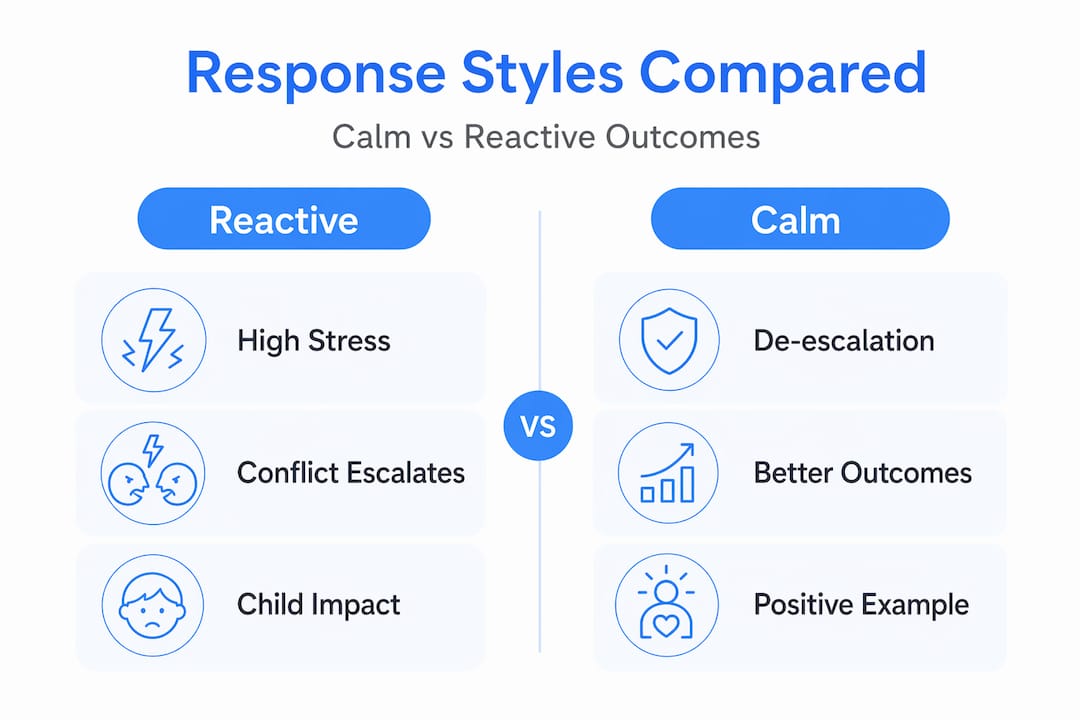
| Factor | Reactive response | Calm response |
|---|---|---|
| Emotional state when sending | High arousal, defensive | Regulated, intentional |
| Effect on co-parent | Escalates tension | Reduces escalation potential |
| Impact on children | Prolongs conflict environment | Reduces exposure to conflict |
| Legal standing | May be used against you in court | Consistent with court-appropriate communication |
| Long-term pattern | Reinforces conflict loops | Builds communication credibility |
Reactive responses do not just feel bad in the moment. They trap both parents in high-arousal cycles that are measurably harmful to children. Every time you fire back quickly and emotionally, you train both yourself and your co-parent to expect that pattern. The cycle becomes self-sustaining.
The benefits of calm responses in custody situations go beyond the emotional. Family court judges and attorneys look at communication records. A parent who consistently responds with restraint, focus, and respect for the children's needs builds a credible record over time. One who escalates and attacks builds a different kind of record.
A critical distinction: calm responses are not the same as suppressed responses. Suppressing your emotions without processing them leads to burnout and eventual explosions. The goal is regulation, not silence. You can feel angry, hurt, and frustrated while still choosing what you write. Calm responses succeed because they align with reappraisal strategy rather than rumination. Reappraisal is active. It involves deliberately changing how you interpret a situation before you act on it.
What the research tells us about long-term benefits
Pulling the evidence together, several clear patterns emerge for co-parents who prioritize calm communication strategies.
- Children of parents who use lower-conflict communication show fewer behavioral and emotional problems, and the effect is measurable within months, not years.
- Parents who practice reappraisal over rumination report lower exhaustion and better closeness with their children, confirming that the benefits of calm responses extend well beyond the co-parenting relationship.
- Parenting interventions targeting conflict produce the strongest results when they include structured tools and consistent practice, not just one-time advice.
- Calm responses work best as part of a larger communication plan rather than as isolated moments of restraint. A single calm message in a history of reactive ones has limited impact. Consistency is what changes outcomes.
- Learning to write a calm response is a trainable skill. With the right support and structure, it becomes easier over time, even in high-conflict situations.
The evidence is clear. The benefits of calm communication are not abstract or theoretical. They show up in your child's sleep, behavior, and sense of safety. They show up in your own stress levels and legal standing. They compound over time when you practice them consistently.
My take on what really changes when you go calm
I've seen a lot of parents come to Replycalmly after months of reactive exchanges, exhausted and discouraged. What strikes me every time is how quickly they assume the other parent is the problem. Sometimes that's partly true. But the pattern that actually shifts outcomes is what they choose to do with the next message.
The hardest thing I've learned about calm responses is that they feel like losing at first. When someone sends you something unfair or cruel, responding with restraint feels like letting it stand. It doesn't. It actually breaks the cycle the other parent is counting on. Reactive responses feed high-conflict communication. Calm responses starve it.
What I've found actually works, beyond the individual techniques, is combining emotional regulation practice with a system. Using a response generator, keeping messages documented, and having templates for the toughest conversations removes the need to perform emotional regulation perfectly in every charged moment. You build the structure first, and the structure does a lot of the work for you.
The parents I've watched make the most progress are not the ones who never feel angry. They're the ones who get consistent. And consistency, more than any single perfect response, is what rebuilds a co-parenting relationship into something workable. Your children are watching how you handle hard things. Give them something worth watching.
— Devin
Tools to help you respond calmly, every time
If you've ever stared at a hostile message and had no idea how to reply without making things worse, you're not alone. That's exactly the problem Replycalmly was built to solve.
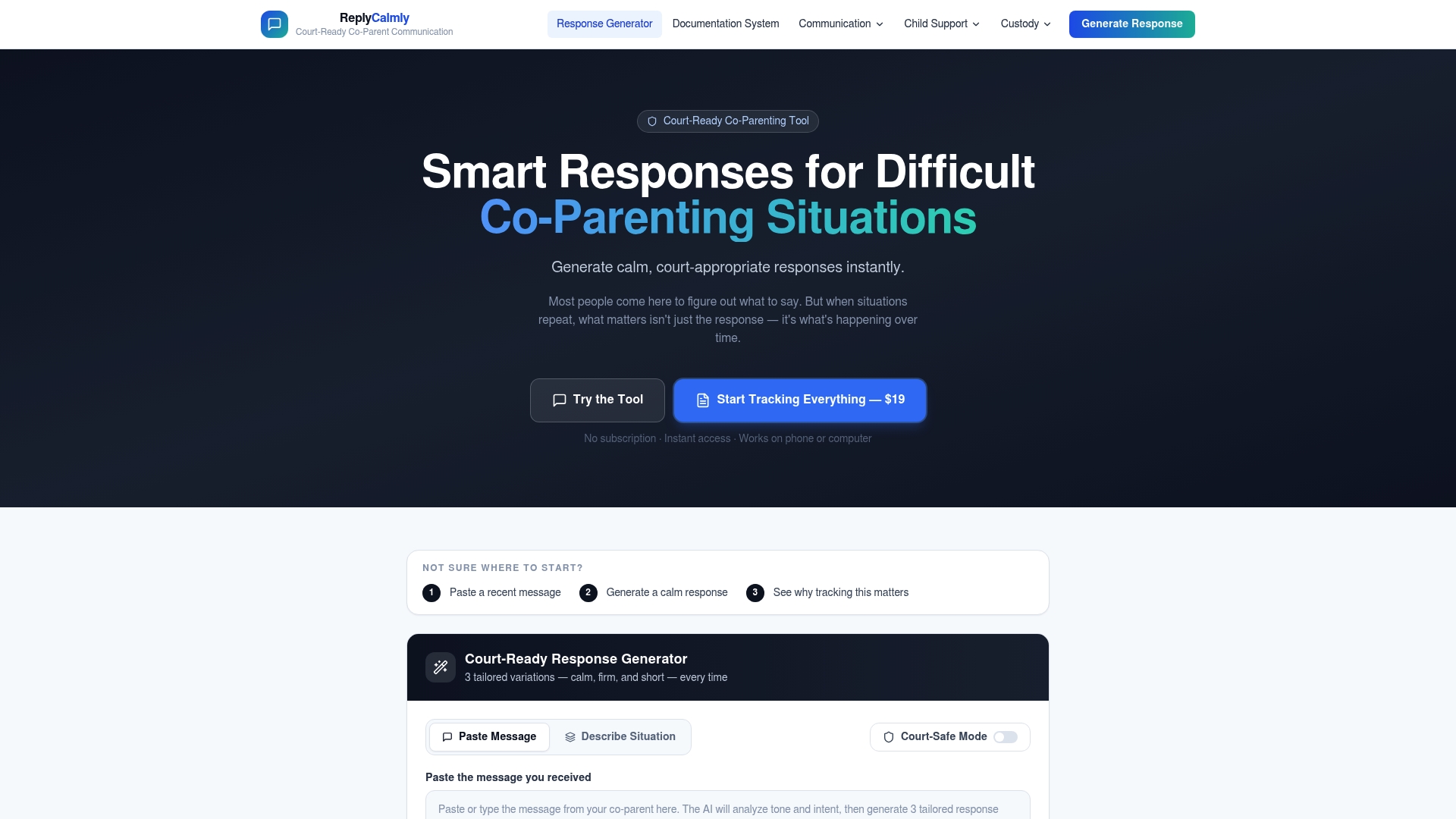
Replycalmly's co-parent response generator lets you paste in any message you've received and get multiple calm, court-appropriate response options instantly. Whether you need something firm, brief, or neutral, you get real options without drafting under pressure. The platform also helps you track communication patterns over time, which matters enormously if your case heads to court. For parents who want a longer-term structure, the communication plan template gives you a framework for keeping every exchange child-focused and documented. Start with the free tools and build from there.
FAQ
Why use calm responses in co-parenting?
Calm responses reduce conflict escalation, protect your children from the emotional effects of interparental tension, and build a consistent communication record that holds up in family court.
How do calm responses help in custody situations?
In custody situations, calm responses demonstrate parental maturity and cooperation to the court, while also reducing the reactive cycles that harm child emotional security over time.
What is the 90-second rule for emotional regulation?
The 90-second rule involves pausing for 60 to 90 seconds before responding, which allows the neurological surge of an emotional reaction to pass so you can reply with intention rather than impulse.
Is staying calm the same as suppressing your feelings?
No. Calm responses rely on reappraisal, which means actively reframing how you interpret a situation before responding. Suppression means pushing feelings down without processing them, which leads to burnout. Reappraisal produces better outcomes for both parents and children.
How can I stay consistent with calm responses over time?
Consistency improves significantly when calm responses are supported by structure, such as templates, communication apps, and response generators, rather than relying on willpower alone during high-stress moments.