
Monitoring co-parenting communication means using structured tools and documented channels to keep every exchange transparent, child-focused, and legally defensible. Between 10% and 20% of custody cases evolve into high-conflict scenarios where unmonitored texts become weapons rather than coordination tools. Platforms like TalkingParents and OurFamilyWizard exist precisely because standard messaging fails parents who need accountability. Understanding why monitor co-parenting communication matters is the first step toward protecting your children and your legal standing simultaneously.
Why monitoring co-parenting communication protects your children first
Children caught in high-conflict custody situations do not simply feel sad. Chronic parental conflict causes emotional dysregulation and hypervigilance in children, meaning their nervous systems stay on alert even when no argument is happening. That prolonged stress response affects concentration, sleep, and the ability to form healthy relationships well into adulthood. Monitored communication directly interrupts this cycle by removing children from the line of fire.
When both parents know every message is logged and potentially court-viewable, the incentive to vent, threaten, or manipulate drops sharply. Dedicated platforms create a formal boundary that shifts the tone from personal grievance to parenting logistics. That shift is not cosmetic. It reduces children's exposure to the emotional volatility that causes lasting psychological harm.
"The goal of monitored communication is not surveillance. It is structure. Structure protects children by keeping adult conflict out of the spaces children occupy emotionally."
Keeping messages factual and respectful also prevents the most damaging pattern in high-conflict co-parenting: using children as messengers or emotional proxies. When parents communicate only through documented channels about schedules, health, and education, children stop feeling like they are carrying adult burdens.
Pro Tip: Set a personal rule to read every draft message aloud before sending. If it sounds like something you would not say in front of a judge, rewrite it.
- Limit messages to child-related topics only: schedules, health, school, and activities.
- Avoid responding to emotional bait. Silence on a monitored platform is legally neutral.
- Never reference adult disputes, finances unrelated to the child, or personal grievances in writing.
- Use the platform's built-in read receipts to confirm delivery without follow-up calls or texts.
What legal benefits does monitoring co-parent communication provide?
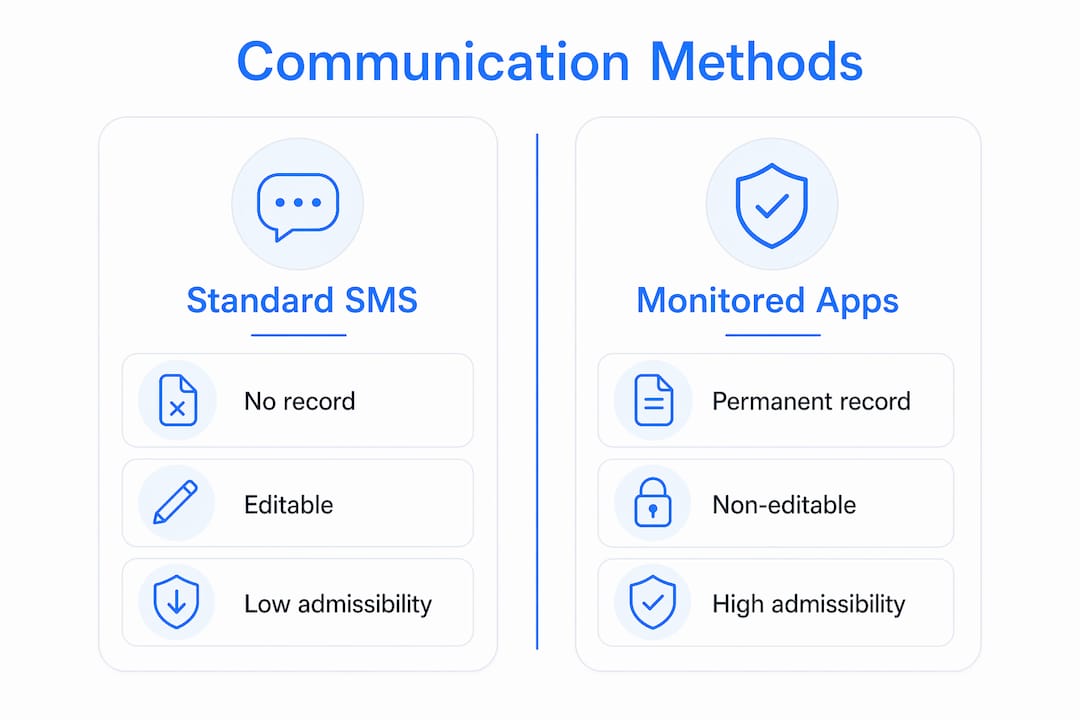
The legal case for monitored communication is straightforward. Standard text messages can be edited or deleted, whereas co-parenting apps create unalterable records with original timestamps. That distinction matters enormously when a judge needs to reconstruct what was actually said and when. A screenshot can be cropped or fabricated. A TalkingParents log cannot.
Courts increasingly accept app-based records as primary evidence in custody disputes, which reduces the need for costly testimony and depositions. TalkingParents supports over 500,000 families with communication records that courts rely on for dispute resolution. That scale reflects how widely family law professionals now expect documented communication as a baseline in contested cases. You can learn more about why documentation matters in custody proceedings before you need it in court.
The deterrence effect is equally significant. Parents who know their messages are permanently logged tend to write differently. Hostile language, false accusations, and manipulation attempts decrease when the author understands that every word is preserved and attributable.
| Communication Method | Record Integrity | Court Admissibility | Editability |
|---|---|---|---|
| Standard SMS/text | Low | Questionable | Editable or deletable |
| Medium | Moderate | Can be altered before screenshot | |
| Co-parenting app (e.g., TalkingParents) | High | Widely accepted | Unalterable with timestamps |
| Court-mandated platform (e.g., OurFamilyWizard) | Highest | Directly court-integrated | Fully locked and certified |
Pro Tip: Export and save a PDF copy of your communication log monthly. Courts move slowly, and having offline backups protects you if a platform changes its policies or pricing.
Consistently inflammatory tone, even on a monitored platform, can be used against a parent to limit custody or require supervised exchanges. This means monitoring protects you only if you also communicate well. The record works both ways. Parents who write calmly and factually build a documented history that demonstrates fitness. Those who do not build the opposite. Reviewing court-mandated tools that offer certified records is worth doing before your next hearing.
How do monitored tools improve co-parent relationships over time?
Technology has moved well beyond simple message logging. AI-powered sentiment scanners in co-parenting apps now alert users to escalating language before a message sends, giving parents a real-time pause before a reactive reply becomes a permanent record. AppClose's Co-Parent Assist feature is one example of this approach. The tool does not judge or control the parent. It simply flags tone so the parent can choose a better word before it is too late to take back.

This kind of friction is productive. The few seconds it takes to reconsider a message is often the difference between a neutral exchange and a hostile one that ends up in a motion filing. AI tools aim to empower parents to maintain respectful communication, not to police them. That framing matters for parents who resist monitoring because it feels punitive.
In high-conflict situations, shifting to parallel parenting with monitored communication is a recognized strategy for reducing stress while maintaining child-focused coordination. Parallel parenting limits direct contact and routes all communication through documented channels, which many family law professionals recommend when cooperative co-parenting is not realistic. The monitored platform becomes the only required point of contact, which removes the triggers that escalate conflict in person or over the phone.
Pro Tip: Treat your co-parenting app like a work email system. Professional tone, short messages, and no personal commentary. That mental reframe alone changes how you write.
The long-term impact on the co-parenting relationship is real. Parents who consistently use monitored platforms report that over time the formal structure reduces the emotional charge of routine exchanges. Scheduling a pickup becomes a logistics task rather than a confrontation. That shift does not require the other parent to cooperate fully. It only requires you to hold the standard consistently.
What are the best practices for implementing monitored communication?
Choosing the right platform is the starting point, but it is not the whole answer. OurFamilyWizard and TalkingParents both offer unalterable records and court-accepted exports. The right choice depends on whether your court has a preferred platform, what features your attorney recommends, and whether you need certified records or basic logging. Start by asking your attorney before paying for a subscription.
Once you have a platform, the following steps make monitored communication work in practice:
- Set communication windows. Agree on specific times for non-emergency messages, such as between 8 a.m. and 8 p.m. This prevents late-night reactive exchanges that rarely produce useful outcomes.
- Define permitted topics. Limit written communication to child health, school, schedule changes, and extracurricular activities. Everything else can wait for a mediator or parenting coordinator.
- Apply the 24-hour rule. Before responding to any message that triggers an emotional reaction, wait 24 hours. The monitored record will show the timestamp of your reply. A measured response sent the next day reads better than an immediate reactive one.
- Use the gray rock method. Keeping communication short, factual, and avoiding emotional bait protects your legal record and reduces the other parent's ability to draw you into conflict. Respond only to the child-related content of any message, regardless of what else it contains.
- Involve a parenting coordinator if needed. In the most high-conflict cases, a court-appointed parenting coordinator can review communication logs and make binding decisions on disputes without requiring a full court hearing. This saves time and legal fees.
- Document incidents separately. Use a tracking system to log incidents, categorize patterns such as custody violations or false accusations, and build a timeline. A dashboard view of repeated behavior is far more persuasive to a judge than a single message.
Pro Tip: Never use the co-parenting platform to respond to false accusations in real time. Screenshot the message, note the date, and discuss your response with your attorney before replying. Reactive denials often do more damage than a measured, delayed response.
Parallel parenting minimizes emotional contact and limits communication to child-focused essentials, which many family law experts recommend in high-conflict cases. Combining that behavioral approach with a monitored platform gives you both the structural protection of documentation and the psychological protection of reduced direct contact.
Key takeaways
Monitoring co-parenting communication protects children, builds a court-admissible record, and reduces conflict by replacing reactive exchanges with structured, documented dialogue.
| Point | Details |
|---|---|
| Children come first | Monitored communication removes children from adult conflict by keeping exchanges factual and formal. |
| Legal records matter | Co-parenting apps create unalterable, timestamped records that courts accept and standard texts cannot match. |
| Tone affects outcomes | Inflammatory language on monitored platforms can limit custody, so calm writing protects you legally. |
| Technology helps | AI sentiment tools like AppClose's Co-Parent Assist flag escalating language before messages send. |
| Behavior drives results | The gray rock method and 24-hour rule, combined with a monitored platform, reduce conflict escalation consistently. |
What I have learned from watching parents use monitored communication
I have seen parents arrive at monitored communication reluctantly, convinced it is a form of surveillance designed to trap them. Within a few months, most of them say the opposite. The structure removes a burden they did not know they were carrying: the constant anticipation of the next ambush message and the pressure to respond perfectly in real time.
The most significant change I observe is not legal. It is emotional. When parents stop receiving unmonitored texts at midnight and start seeing only platform messages during agreed hours, their baseline anxiety drops. That change ripples directly to their children. A calmer parent is a more present parent, and children feel that difference even when they cannot name it.
The hardest part is the mindset shift, not the technology. Some parents resist monitored platforms because they believe it signals weakness or concession. That framing is wrong. Choosing a documented channel is a strategic decision, not a surrender. It tells the court you are organized, child-focused, and unwilling to be provoked into behavior that damages your case.
My honest advice: do not wait for a judge to order it. Set up a monitored platform before the next conflict escalates. The parent who establishes the documented record first holds a structural advantage in every dispute that follows.
— Devin
How Replycalmly helps you communicate with confidence
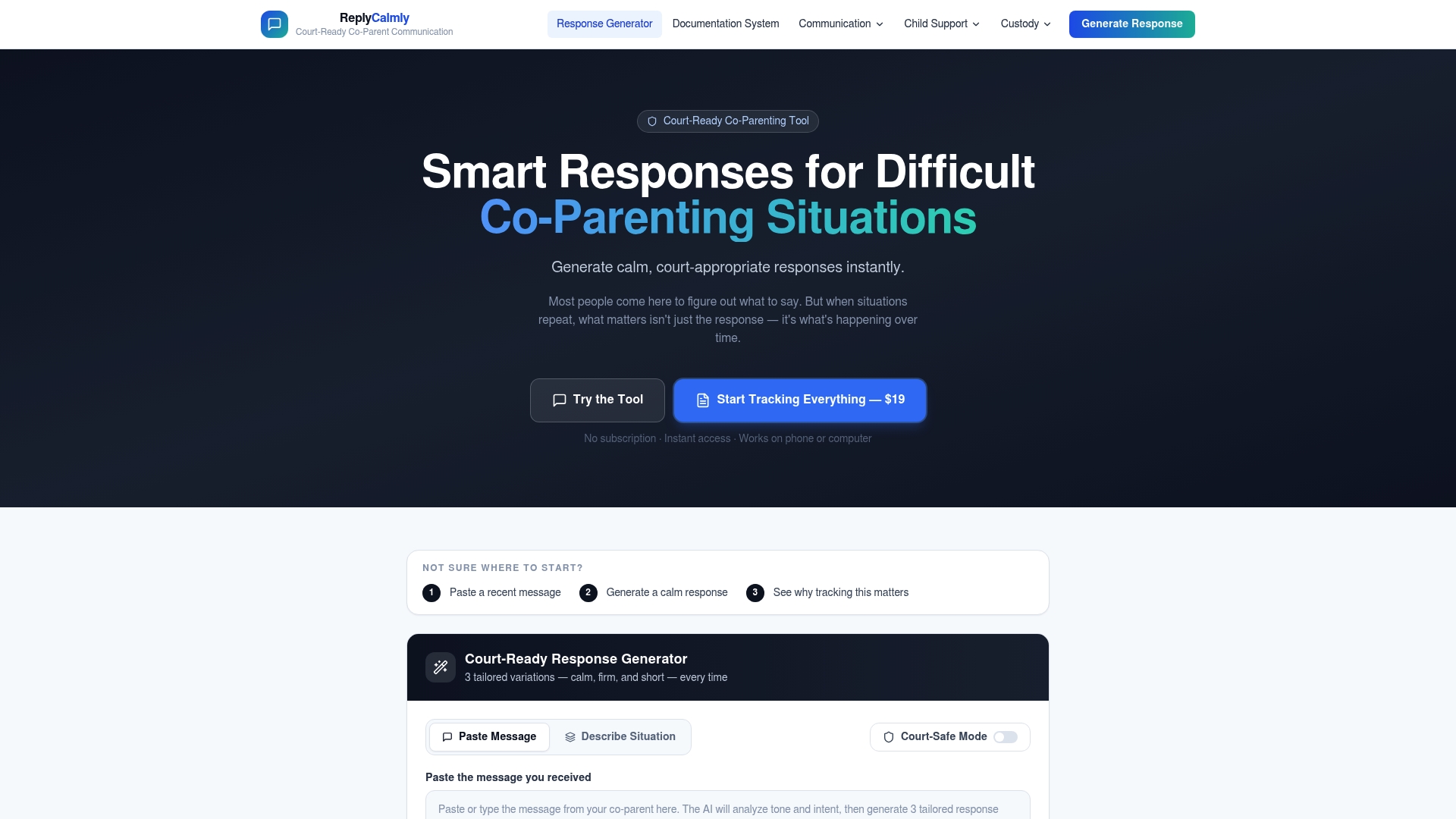
Replycalmly is built specifically for high-conflict co-parenting situations where every word carries legal weight. The platform's AI-powered response generator produces calm, firm, and court-appropriate reply variations for difficult messages, so you never have to figure out the right words under pressure. Its incident tracking system logs patterns over time and visualizes them in a dashboard, giving you organized evidence rather than a chaotic folder of screenshots.
If you are ready to take control of your communication record, explore the best co-parenting apps for documentation or use the free response generator to handle your next difficult message today. Replycalmly integrates with OurFamilyWizard to strengthen your existing setup without replacing it.
FAQ
Why should I monitor co-parenting communication?
Monitoring creates an unalterable, court-admissible record of every exchange and deters hostile behavior by making both parents accountable for what they write. It also shields children from conflict by keeping communication formal and child-focused.
What platforms are used for monitored co-parenting communication?
TalkingParents and OurFamilyWizard are the most widely used platforms, both offering timestamped, unalterable records that courts accept in custody disputes. Your attorney or court order may specify a preferred platform.
Can monitored communication be used against me in court?
Yes. Consistently inflammatory or hostile messages on a monitored platform can be used to limit custody or require supervised exchanges. Writing calmly and factually protects your legal standing.
What is the gray rock method in co-parenting communication?
The gray rock method means responding only to child-related facts in a message and ignoring emotional bait entirely. Combined with a monitored platform, it reduces conflict escalation and builds a neutral, credible communication record.
How does monitoring co-parenting communication help children?
Monitored communication removes children from adult disputes by keeping exchanges formal and logistics-focused. Reducing their exposure to parental conflict lowers chronic stress and supports healthier emotional development.