
Most co-parents assume saving a few screenshots is enough documentation. It isn't. The role of communication tracking in custody disputes goes far deeper than preserving text messages. It shapes how conflicts get resolved, how courts perceive your credibility, and how well you protect your child's stability when things get heated. This guide covers what structured tracking actually looks like, why informal logging fails you legally and emotionally, and how to build a system that works when it matters most.
Table of Contents
- Key Takeaways
- The role of communication tracking in co-parenting
- Spotting toxic patterns through tracking
- Tools and methods for structured tracking
- Using tracked data for conflict resolution and court
- Common challenges and how to get past them
- My honest take on why this matters more than most parents realize
- How Replycalmly helps you track and respond with confidence
- FAQ
Key Takeaways
| Point | Details |
|---|---|
| Tracking goes beyond screenshots | Effective documentation captures timing, tone, frequency, and pattern, not just message content. |
| Patterns reveal more than words | Systematic tracking exposes manipulation cycles that casual observation misses entirely. |
| Neutral tone protects you legally | Courts notice how you communicate, not just what the other parent said. |
| Dedicated platforms beat informal logging | Timestamped, unalterable records from specialized apps carry far more legal weight than texts. |
| Tracking supports conflict de-escalation | Objective records help you recognize negative cycles early and interrupt them before they escalate. |
The role of communication tracking in co-parenting
Communication tracking in a co-parenting context means systematically recording every exchange between you and your co-parent in a structured, consistent, and retrievable format. This goes well beyond saving messages. It means logging the timing of exchanges, the tone used, the content of requests, and the response behavior you observe over time.
The importance of communication tracking shows up most clearly when disputes reach a courtroom. Judges and attorneys are trained to look for patterns, not isolated incidents. A single angry message means little. A documented pattern of harassment every Sunday evening before your custody exchange tells a completely different story.
Here is what effective tracking should cover:
- Message content: The exact words used, including unusual phrasing or coded language
- Timestamps: When messages are sent, especially outside normal hours or in violation of court orders
- Tone and tone shifts: Escalation from neutral to aggressive, or sudden warmth after a conflict
- Response time patterns: Delays that suggest withholding, or immediate barrages that suggest pressure tactics
- Topic categories: Custody conflicts, financial disputes, false accusations, or child welfare concerns
A common misconception is that informal or selective logging is sufficient. It is not. Manipulative communication often uses reasonable-sounding language to mask aggressive intent, making it nearly invisible to anyone reviewing only isolated messages.
Pro Tip: Start your communication log the moment you sense conflict escalating, not after it has already peaked. Gaps in documentation are one of the first things attorneys flag.
Spotting toxic patterns through tracking
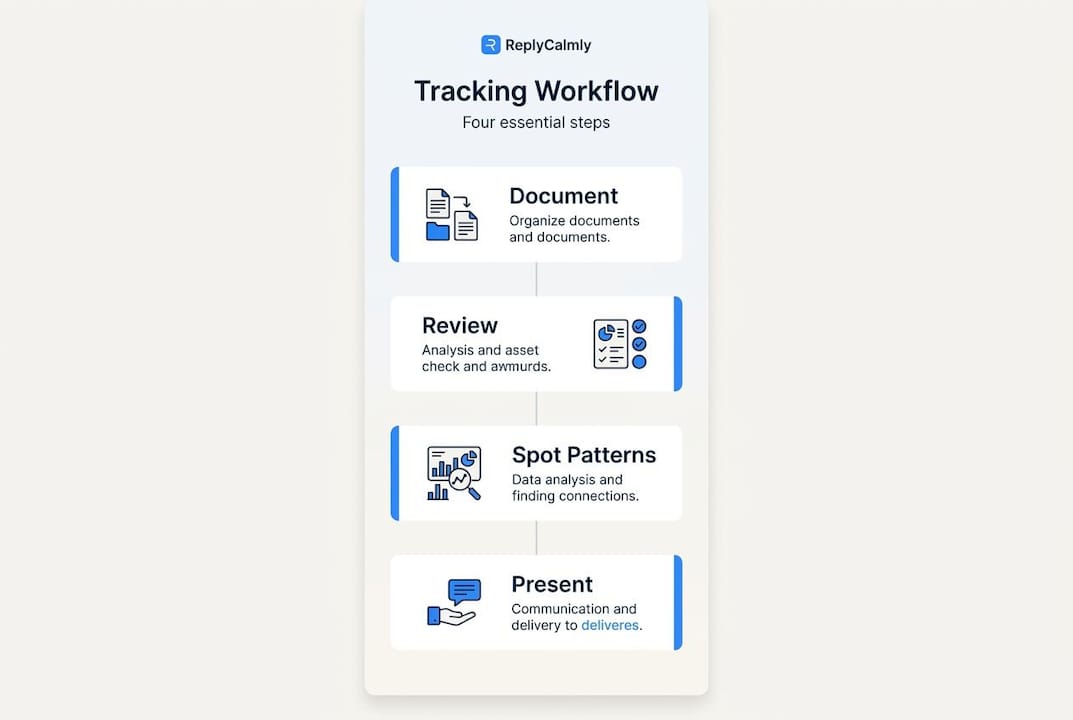
High-conflict co-parenting often follows predictable cycles, and tracking is the tool that makes those cycles visible. Four destructive communication patterns appear repeatedly in contentious custody situations: criticism directed at your character rather than behavior, defensiveness that deflects responsibility, contempt expressed through sarcasm or dismissiveness, and stonewalling through silence or refusal to engage on child-related matters.
| Pattern | What it looks like | Why tracking catches it |
|---|---|---|
| Criticism | "You never show up on time" | Frequency logs reveal how often blame is directed personally |
| Defensiveness | Deflecting every concern back | Response pattern records show a consistent refusal to address issues |
| Contempt | Sarcastic or demeaning language | Tone tracking flags language that courts recognize as harassment |
| Stonewalling | Ignoring messages about the child | Timestamp logs document non-responses that violate parenting plans |
Why track communication patterns at all if they feel obvious in the moment? Because feelings are not evidence. Objective tracking tools validate your experience and transform subjective frustration into documented fact. When your attorney asks for proof that your co-parent routinely ignores medical questions about your child, you need a log, not a memory.
Manipulative messages are often designed to provoke. The goal is to get you to respond emotionally, creating a record that makes you look volatile. Tracking timing, tone, and adherence to boundaries, not just content, is what gives your documentation legal weight.
- Watch for late-night messages sent right before custody transitions
- Note messages that loop back to the same accusation repeatedly
- Flag communication that arrives through your children rather than directly to you
Pro Tip: When you review your log at the end of each week, look for trigger-response cycles. Ask yourself: Is there a consistent event, like a custody exchange, that precedes every escalation?
Tools and methods for structured tracking
Knowing you should track communication is one thing. Building a system you can actually maintain is another. Here is a practical sequence for setting up effective tracking:
-
Choose a dedicated platform over informal messaging. Screenshots and casual text logs are often insufficient for court admissibility. Dedicated platforms that timestamp entries and maintain unalterable records carry significantly more legal weight. Apps built specifically for co-parenting documentation meet this standard in ways that your phone's message history does not.
-
Apply a structured communication framework. The SBAR model (Situation, Background, Assessment, Recommendation) was developed for high-stakes healthcare communication, but it translates directly to co-parenting. Structured formats like SBAR have been shown to reduce communication failures from 31% to 11%, giving both parties a clear record of what was requested and why.
-
Log self-monitoring notes alongside external messages. Self-monitoring and diary-style recording help you move beyond automatic emotional reactions and identify your own patterns, not just your co-parent's. Note how you felt before responding, and whether your tone matched the neutral standard you are aiming for.
-
Categorize every entry. Use labels like custody conflict, false accusation, schedule change request, or boundary violation. Categories transform a raw log into a structured dataset your attorney can search and analyze quickly.
-
Review your log on a set schedule. Weekly reviews let you catch escalating patterns before they become crises. This is one of the most underused benefits of tracking communication.
Choosing the right channel for each type of communication also matters. Simple updates via text or email and sensitive issues via structured platforms reduce misunderstanding and give you cleaner documentation. A heated phone call leaves no record. A written message on a dedicated platform does.
Pro Tip: Write every log entry as if a judge will read it tomorrow. Avoid emotional language, sarcasm, and personal opinions. State facts, times, and direct quotes.
Using tracked data for conflict resolution and court
Once you have consistent records, you can use them strategically. This is where the benefits of tracking communication shift from passive to active.

Relationships and co-parenting arrangements that function well maintain roughly a 5:1 ratio of positive to negative interactions. Your logs can help you measure whether your co-parenting relationship is trending toward functional or escalating toward crisis. If your last 30 logged exchanges show 28 conflicts and 2 neutral interactions, that data tells you something concrete about the state of the relationship.
Here is how to use your documentation effectively:
- Share selectively with your attorney. Not every message is worth submitting. Your attorney needs patterns, not volumes. Bring categorized summaries and your most clear-cut examples.
- Use records in mediation. A mediator reviewing objective logs can help redirect a co-parent who denies problematic behavior far more effectively than verbal accusations alone.
- Build a co-parenting evidence log that is court-ready. This means consistent formatting, clear timestamps, and factual language throughout.
- Interrupt negative cycles early. When you see a pattern forming in your log, you can change your own response strategy before things escalate. That is a direct benefit of how communication tracking works in real life.
- Document your own positive communication. Courts assess both parents. Showing that your messages have been consistently child-focused, calm, and solution-oriented builds your credibility significantly.
Parallel parenting with neutral, concise, child-focused communication and parallel documentation establishes a strong position in court while protecting your well-being day to day.
Common challenges and how to get past them
Even with the best intentions, communication tracking breaks down. Here are the obstacles co-parents face most often, and how to work through them.
Emotional reactivity in your own entries. When you are furious, your log entries will reflect that. This can undermine your credibility if discovered in court. Write entries factually and revisit them the next morning before finalizing language.
Inconsistency and burnout. Tracking every exchange feels exhausting, especially in high-conflict situations. The fix is simplicity. Use a platform with quick entry templates. Log immediately after an exchange rather than reconstructing it later.
Privacy and admissibility concerns. Not every jurisdiction treats private communication logs the same way. Talk to your attorney about what format and platform your documentation should use before you need it in court.
- Avoid logging hearsay from your children about the other parent
- Do not log communications that occurred before your legal proceedings began without attorney guidance
- Keep your log in a secure, password-protected location
Taking the bait on provocative messages. One of the hardest parts of tracking is recognizing manipulation tactics in real time and choosing not to engage. Your log should capture what was sent to you. Your response should remain measured regardless.
Pro Tip: If a message feels designed to provoke you, wait 24 hours before responding. Log it immediately, but delay your reply. This single habit will improve both your documentation quality and your legal standing.
My honest take on why this matters more than most parents realize
I've worked with enough co-parents in high-conflict situations to know that the single most common regret is this: "I wish I had started tracking earlier."
By the time most people think to document their communication, they are already six months into escalating conflict with a gap-riddled record that frustrates their attorney and leaves them unable to prove what they know to be true. The reason isn't laziness. It's the false belief that things will calm down on their own, that informal notes will be enough, or that courts will simply see through the other parent's behavior without documentation.
What I've learned is that structured tracking isn't just a legal tool. It changes how you show up in those exchanges. When you know you are logging your responses alongside theirs, you naturally write more carefully, stay calmer, and stop feeding cycles that drain you. That shift from reactive to reflective co-parenting is worth more than almost any legal strategy.
The parents who do this well treat tracking as part of their own self-care routine, not a burden. They log, they review, they adjust. And when the day comes that they need those records, they are ready.
— Devin
How Replycalmly helps you track and respond with confidence
If you are ready to move from scattered notes to a system that actually holds up, Replycalmly was built for exactly this situation.
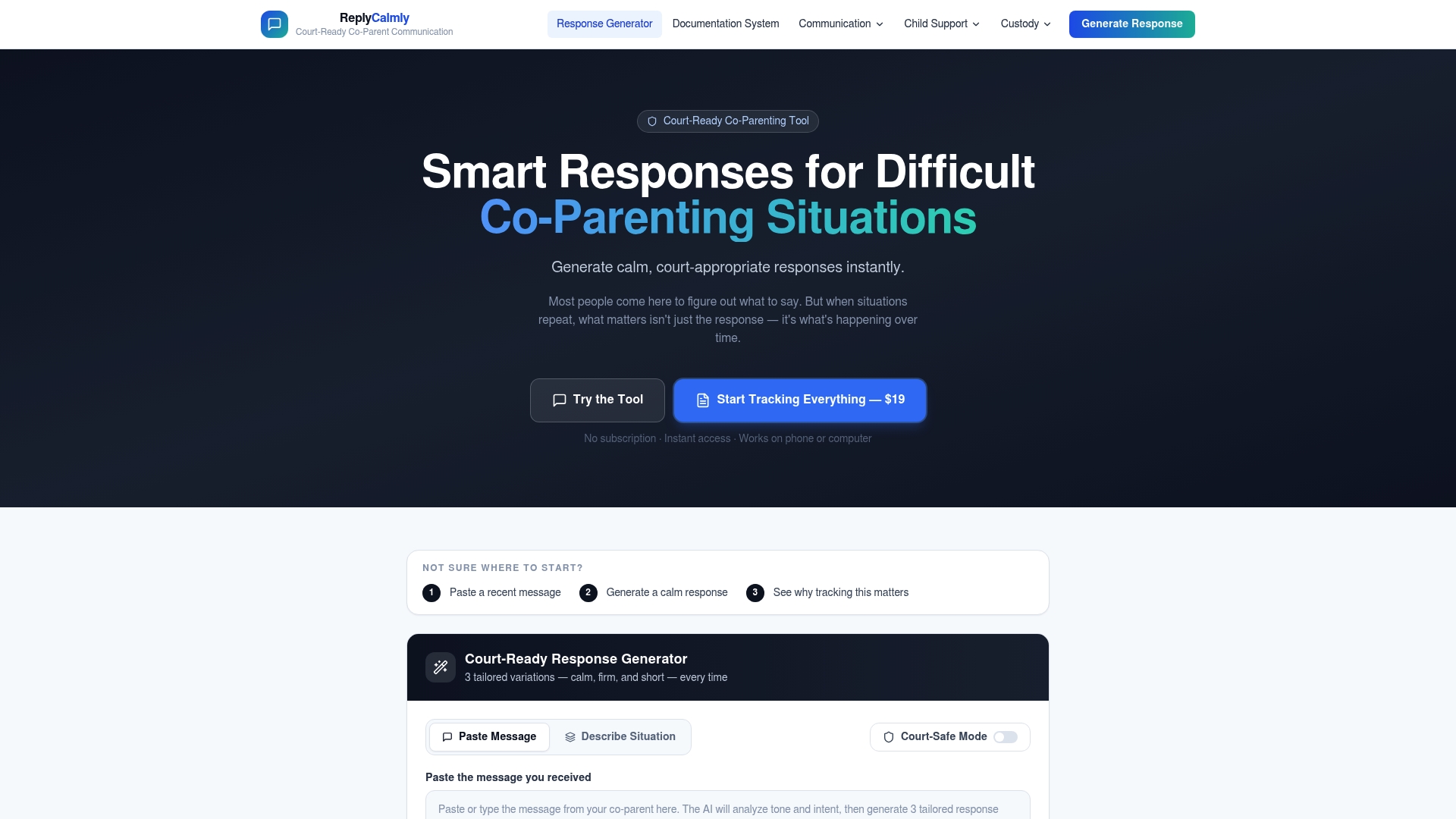
Replycalmly's platform logs your co-parenting exchanges, categorizes incidents by type, and visualizes your communication patterns over time through a clear dashboard. Its response generator produces calm, court-appropriate replies when you receive a difficult message, so you are never scrambling for words under pressure. For parents who want a structured starting point, the co-parenting communication plan template helps organize future exchanges before conflict forces the issue. And when you need to evaluate your documentation apps, Replycalmly's comparison guide makes that decision straightforward.
FAQ
What is communication tracking in a custody dispute?
Communication tracking means systematically documenting every exchange between co-parents, including timing, tone, content, and response behavior, in a format that can be reviewed and used as evidence in legal proceedings.
Why track communication patterns instead of just saving messages?
Saved messages capture content, but patterns reveal intent. Tracking frequency, timing, and tone across many exchanges exposes manipulation cycles and policy violations that isolated messages cannot show.
How does communication tracking work on dedicated platforms?
Dedicated co-parenting platforms timestamp every entry, prevent alterations after the fact, and allow categorization by issue type, making records far more admissible and useful in court than informal screenshots or text threads.
How can tracked communication help in conflict resolution?
Objective communication records give mediators and attorneys concrete patterns to reference, making it harder for a co-parent to deny behavior and easier to redirect conversations toward child-focused solutions.
How often should I update my communication log?
Log every significant exchange immediately after it happens. Weekly reviews help you spot emerging patterns and adjust your approach before a situation escalates further.