
Legal documentation in custody disputes is defined as the organized, contemporaneous record of events, communications, and observations that courts and mediators use to evaluate a child's best interests. Without it, your claims are just claims. With it, they become evidence. Approximately 90% of custody cases settle without ever reaching trial, which means your records do most of their work in mediation rooms and attorney negotiations, not courtrooms. The role of documentation in custody is not optional preparation. It is the foundation of every credible argument you make.
What types of documentation matter most in custody cases?
Courts and mediators evaluate evidence across several categories. Knowing which records carry the most weight saves you time and protects you from submitting irrelevant material.
Custody journals are the backbone of any documentation strategy. A custody journal links incidents chronologically and pairs them with supporting records, turning scattered notes into a coherent, credible story. Write entries the same day events occur. Include the date, time, location, who was present, and exactly what was said or observed.

Communication records are the second pillar. Texts, emails, and parenting app logs preserved in their original form carry significant weight. Do not summarize messages. Save the original thread, including timestamps and sender information.
Other record types that courts regularly review include:
- Visitation logs: Track scheduled versus actual exchange times, including any late arrivals, no-shows, or early returns.
- School and medical records: Report cards, attendance logs, doctor visit summaries, and therapy notes document your child's welfare over time.
- Financial records: Receipts for child-related expenses, child support payment history, and cost-sharing disputes.
- Photographic and video evidence: Photos of injuries, living conditions, or exchanges. Every file must carry a clear date and timestamp.
- Third-party statements: Written accounts from teachers, coaches, pediatricians, or family counselors who have direct knowledge of relevant events.
Pro Tip: Never delete original message threads to "clean up" your phone. Courts require authentication of digital records, and digital records must show origin and authenticity beyond unverified screenshots. Keep originals and back them up to a secure cloud folder.
How to keep custody records that courts will trust
The standard for trustworthy custody documentation rests on three qualities: specificity, contemporaneity, and neutrality. Effective documentation must include accurate dates, exact quotes, and neutral language. Judges discount entries that read as emotional arguments rather than factual observations.
Follow these steps to build records that hold up under scrutiny:
- Write entries the same day. Judges scrutinize journals constructed shortly before trial and treat them as fabrications. A log written in real time carries far more credibility than one assembled weeks later.
- Use exact language. Record what was said word for word, not your interpretation of it. "He said, 'I'm not bringing her back until Monday'" is evidence. "He was being difficult about the schedule" is opinion.
- Adopt a standardized date format. Use YYYY-MM-DD (for example, 2026-03-14) for every entry. Organizing records with standardized date formats and labeled categories speeds up attorney review and builds court trust.
- Separate categories. Keep communication logs, visitation records, medical records, and financial records in distinct labeled folders. Mixing them together forces judges and attorneys to sort through your disorganization.
- Authenticate digital evidence properly. Screenshots alone are often insufficient. Preserve metadata, use platform export functions where available, and note the device and account used to send or receive each message.
- Curate, do not dump. Submit only what directly relates to your child's welfare. Voluminous, uncurated evidence can overwhelm judges and signal that you lack judgment, not that you have a stronger case.
Pro Tip: Use a simple spreadsheet or a dedicated co-parenting documentation app to log incidents consistently. Consistency matters more than volume.
How does documentation improve co-parent communication?
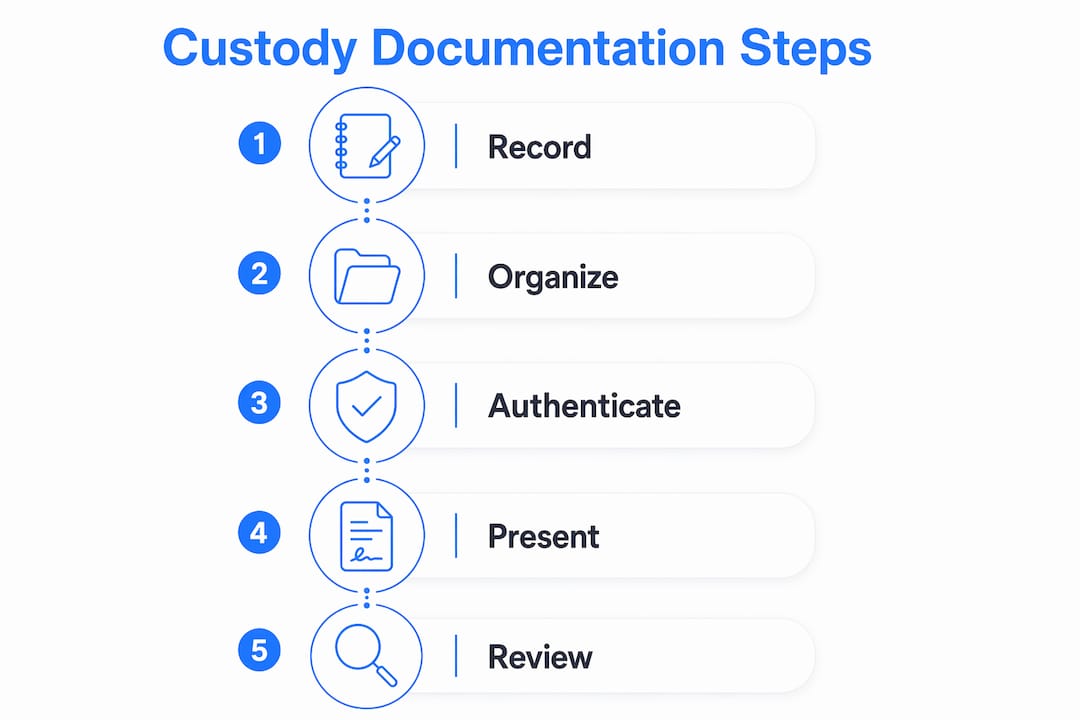
Organized records change the dynamic of co-parent conversations. When you have a written log of what was agreed and what actually happened, you negotiate from facts rather than feelings. Clear custody documentation promotes calmer, fact-focused communication between parents and reduces the conflict that derails cooperative parenting.
Here is how documentation supports better communication in practice:
- It removes ambiguity. When both parents know that exchanges, schedule changes, and agreements are being logged, misunderstandings become harder to manufacture and easier to resolve.
- It supports modification motions. If your co-parent repeatedly violates the parenting plan, a documented pattern of missed pickups or denied visits gives your attorney concrete grounds for an emergency or modification motion.
- It keeps your responses professional. Knowing you will log the conversation encourages you to respond calmly and factually rather than reactively. That tone shows up in your records and reflects well on you.
- It shifts negotiations toward the child. When you present a communication log in custody disputes to a mediator, the conversation moves away from competing narratives and toward what the evidence actually shows about your child's experience.
A practical example: your co-parent claims they never received your message about a schedule change. You have the original timestamped thread saved and logged. That single record ends the argument and keeps the focus on rescheduling rather than blame.
Common documentation mistakes that can weaken your custody case
Most parents make documentation errors not out of dishonesty but out of frustration or inexperience. These mistakes are avoidable once you know what to watch for.
Writing entries long after the fact is the most common problem. Memory fades and details shift. A judge who sees a journal with 30 entries all written in the same week, covering events from the past six months, will question every entry in it.
Using emotional or advocacy language is equally damaging. Phrases like "he is an unfit parent" or "she clearly does not care about our child" read as arguments, not observations. Courts discount them. Write what you saw and heard, not what you concluded from it.
Relying on unverified screenshots creates authentication problems. Digital records require proof of origin and authenticity to be admissible. A screenshot with no metadata, no account information, and no corroborating context can be challenged and excluded.
Submitting everything you have is a trap. Judges favor parents who present clear, organized, factual documentation and perceive them as responsible co-parents. A binder of 400 unorganized pages signals the opposite. Curating evidence to focus on the child's best interests strengthens your case far more than volume does.
Focusing on conflict rather than your child is the subtlest mistake. Courts care about your child's safety, stability, and welfare. Documentation that reads as a character attack on your co-parent, rather than a record of how events affected your child, misses the point entirely.
Key Takeaways
Thorough, contemporaneous, and child-focused documentation is the single most effective tool a parent can bring to a custody dispute, whether in mediation or court.
| Point | Details |
|---|---|
| Write entries the same day | Contemporaneous records are far more credible than journals assembled close to a hearing. |
| Organize by category and date | Label folders by theme (communication, visitation, medical) and use YYYY-MM-DD format throughout. |
| Authenticate digital evidence | Preserve original message threads with metadata; screenshots alone are often insufficient for admissibility. |
| Curate for the child's interest | Submit only records that directly relate to your child's welfare, not every conflict you have logged. |
| Use records to reduce conflict | Fact-based documentation shifts co-parent negotiations away from emotion and toward resolution. |
Why I think most parents underestimate what documentation actually does
Most parents treat documentation as a weapon. They log every grievance, save every angry text, and build a case designed to make the other parent look bad. That approach usually backfires. Judges are experienced readers of human conflict. They recognize a character attack dressed up as evidence, and it reflects poorly on the parent who submitted it.
The parents who benefit most from documentation are the ones who treat it as a record of their own reliability. Every entry you write on time, in neutral language, focused on your child, tells the court something about who you are. It says you are organized, consistent, and focused on what matters. That perception carries real weight, especially in cases where both parents are making competing claims.
I have seen parents lose credibility not because their co-parent was more honest, but because their records were messier, more emotional, and harder to follow. The parent with the cleaner, calmer, more consistent log almost always comes across better, regardless of the underlying facts.
The other thing most parents miss is the emotional benefit of good documentation. Writing factual entries forces you to separate what happened from how it made you feel. That discipline, practiced over months, genuinely reduces the anxiety that comes with high-conflict co-parenting. You stop replaying arguments in your head because you wrote them down accurately the first time. The record exists. You do not have to carry it.
Start small. Log one incident this week using only facts, dates, and direct quotes. Build the habit before you need the evidence.
— Devin
Replycalmly makes court-ready documentation easier
Keeping up with custody documentation while managing daily life is genuinely hard. Replycalmly is built specifically for parents in high-conflict co-parenting situations who need to stay organized without spending hours on paperwork.
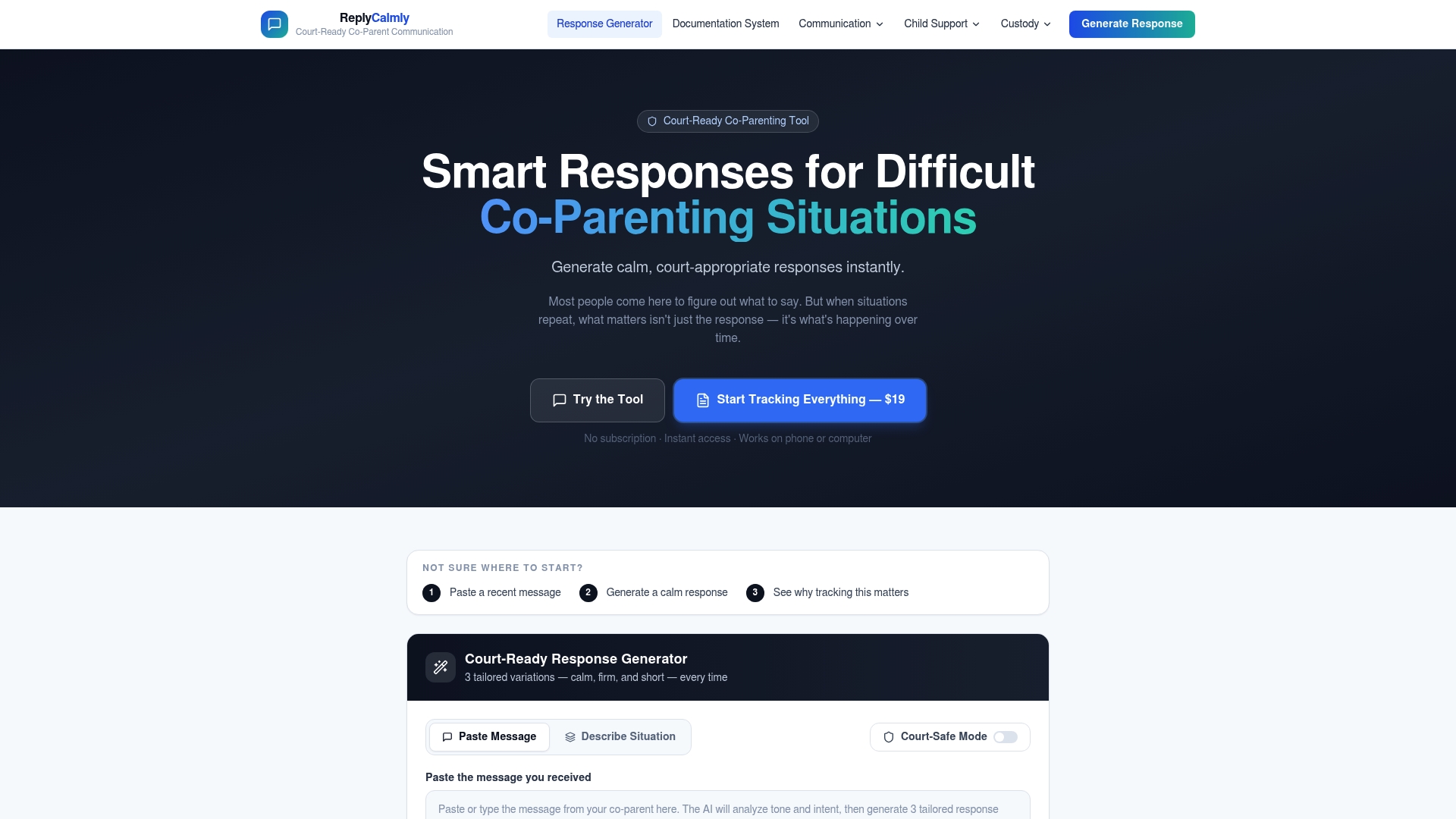
The platform logs incidents, categorizes issues like missed visits or communication violations, and visualizes patterns over time through a clear dashboard. Its co-parenting evidence log helps you track exactly what courts want to see, in a format that is easy to review with your attorney. The response generator produces calm, firm, and court-appropriate replies to difficult messages, so your communication record reflects the professional tone that judges notice. If you are ready to build a stronger, more organized case, Replycalmly gives you the tools to do it consistently.
FAQ
What is legal documentation in custody cases?
Legal documentation in custody cases is any organized, contemporaneous record of events, communications, or observations relevant to a child's welfare. Courts use these records to evaluate parenting fitness and determine custody arrangements.
How does documentation affect custody outcomes?
Documentation turns subjective claims into verifiable evidence. Judges favor parents who present clear, factual, and organized records because it signals responsibility and focus on the child's best interests.
What should a custody journal include?
A custody journal should include the date, time, location, people present, and exact quotes or observable facts for each entry. Neutral language and same-day writing are required for the journal to hold up in court.
Can screenshots be used as evidence in custody cases?
Screenshots can be used as evidence, but they must be authenticated to be admissible. Parents need to demonstrate the origin and authenticity of digital records, which often requires preserving metadata or using platform export functions rather than relying on screenshots alone.
How do I organize custody documentation effectively?
Organize records into labeled folders by category (communication, visitation, medical, financial) and use a standardized date format like YYYY-MM-DD. This structure speeds up attorney review and makes your records easier for a judge to follow.