
Structured co-parenting support is defined as a goal-oriented professional intervention that helps separated parents build a functional parenting alliance centered entirely on their child's needs. Unlike couples therapy, it does not address the romantic relationship. It focuses on communication protocols, structured parenting plans, and conflict resolution skills. The BIFF method (Brief, Informative, Friendly, Firm), parent coordination, and short-term programs like CORE are recognized frameworks used in 2026. For co-parents in high-conflict situations, understanding what is structured co-parenting support is the first step toward protecting your child from the damage that unmanaged conflict causes.
What is structured co-parenting support and how does it work?
Structured co-parenting support is a focused, goal-oriented intervention aimed at improving the parenting alliance, not repairing the adult relationship. Sessions are agenda-driven, meaning each meeting has a defined purpose. Parents draft communication protocols, review transition logistics, and practice neutral, factual messaging that holds up under legal review.
Professional co-parenting counselors do not act as mediators between two people who still love each other. They act as guides who help two adults function as a parenting team. The focus stays on the child at every stage. Emotional grievances about the past relationship are redirected, not processed.
The core components of structured support include:
- Communication protocol drafting. You and your co-parent agree on how, when, and through what channel you will communicate. This removes ambiguity and reduces the chance of conflict.
- Structured parenting schedules. A written schedule covers custody exchanges, holidays, school events, and medical appointments. Clear schedules reduce the number of decisions you need to make in real time.
- Decision-making frameworks. Structured support establishes who makes which decisions and how disagreements get resolved before they escalate.
- Conflict resolution techniques. Evidence-based methods give you a repeatable process for managing disagreements without involving your child.
- Transition logistics planning. Pickup and drop-off procedures are written down to minimize face-to-face friction.
Pro Tip: Before your first structured support session, write down the three communication situations that cause the most conflict. Bring that list to your counselor. Agenda-driven sessions move faster when you arrive with specific problems.
How do co-parenting models vary by conflict level?
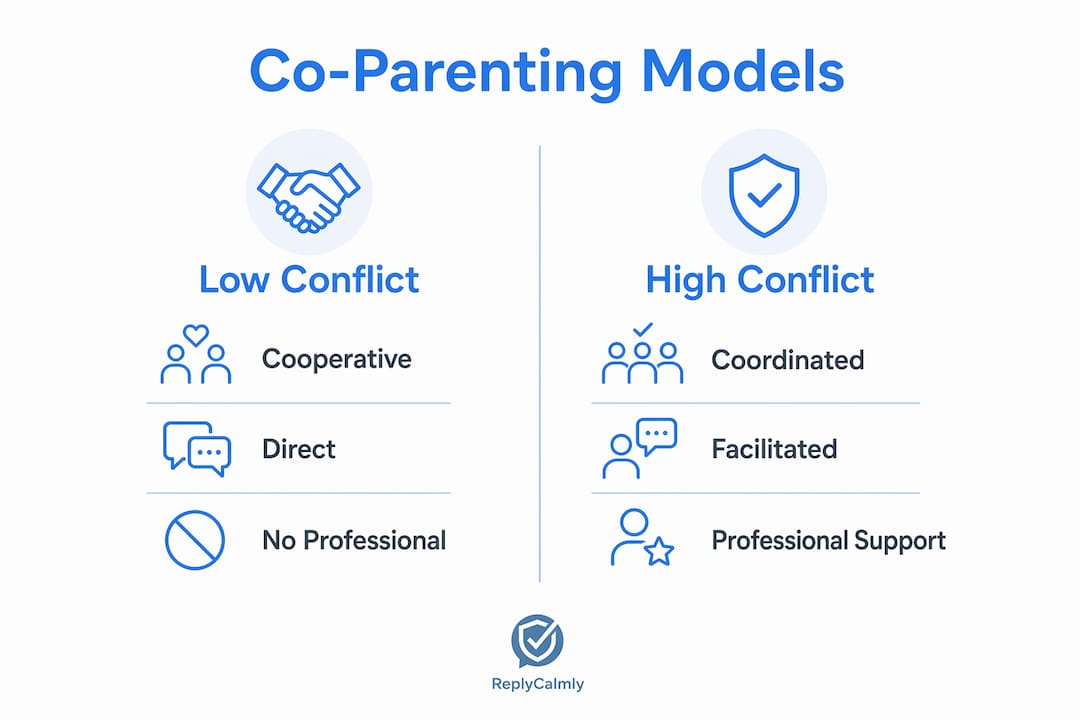
Structured support adapts to the intensity of conflict between parents. Three primary models exist: cooperative co-parenting, coordinated co-parenting, and parallel parenting. Each one suits a different level of conflict and communication capacity.

Cooperative co-parenting works when both parents can communicate directly and prioritize the child without professional mediation at every step. Sessions focus on refining an existing parenting plan and building shared decision-making habits.
Coordinated co-parenting introduces a professional facilitator, often a parent coordinator, who helps manage disputes and can make binding recommendations when parents cannot agree. This model suits moderate-to-high conflict situations where direct communication still occurs but frequently breaks down.
Parallel parenting is the right choice when cooperation is unavailable or unsafe. Parallel parenting limits contact to written-only exchanges and gives each parent independence within their own custody time. Children are protected from conflict exposure because parents rarely interact directly.
| Model | Conflict level | Communication type | Professional role |
|---|---|---|---|
| Cooperative | Low | Direct, flexible | Optional coach |
| Coordinated | Moderate to high | Structured, facilitated | Parent coordinator |
| Parallel | High or unsafe | Written only | Binding decisions possible |
Short-term programs like the CORE program offer a four-session format that teaches communication, collaboration, and parenting plan basics. CORE lets parents test a collaborative framework before committing to ongoing coaching or mediation. That low-commitment entry point matters when one or both parents are skeptical about the process.
Cooling-off periods and limited communication channels are also built into high-conflict models. Restricting contact to one channel, such as a co-parenting app, removes the temptation to escalate through texts, calls, and emails simultaneously.
What communication strategies work in high-conflict situations?
High-conflict co-parenting communication works best when you treat it like a businesslike exchange rather than a personal conversation. Your goal is not to be understood emotionally. Your goal is to convey information about your child clearly and without giving the other parent material to use against you.
The BIFF method gives you a repeatable structure. Messages stay 2–5 sentences long, contain no emotional commentary, and read as factual updates rather than arguments. A message written with BIFF in mind passes what professionals call the "would a judge approve?" test. That test is simple: before you send anything, ask whether a family court judge would view your message as reasonable and child-focused.
Practical communication habits that reduce conflict:
- Write drafts, then wait. Write your message, step away for 10 minutes, then reread it. Remove anything that expresses frustration, sarcasm, or blame.
- Use the right channel for the right purpose. Apps work best for scheduling and financial records. Texts suit urgent logistics only. Email creates a documented thread for longer discussions.
- Set response time expectations in writing. Agree on a 24-hour response window for non-urgent matters. This removes the pressure to reply immediately when emotions are high.
- Keep a shared calendar. A shared digital calendar for school events, medical appointments, and custody exchanges reduces the number of messages you need to send.
- Never use your child as a messenger. All communication about logistics goes directly between parents, not through the child.
Pro Tip: Copy every significant co-parenting message to a dedicated folder or documentation app immediately after sending. Courts look at patterns, not just individual messages. A clean, organized record protects you.
Written communication such as emails, texts, and co-parenting apps creates documentation that reduces misinterpretation and supports court-recommended protocols. The record you build over months becomes your strongest asset if custody arrangements are ever disputed.
How do you choose the right co-parenting support service?
The right service depends on your conflict level, your co-parent's willingness to participate, and your immediate goals. Not every situation calls for the same type of professional support.
- Co-parenting coaching suits parents who communicate adequately but want to improve consistency and reduce friction. Sessions are often individual and focus on your own communication habits.
- Parent coordination suits moderate-to-high conflict situations. A parent coordinator has legal authority in many jurisdictions to make binding decisions when parents cannot agree, which reduces court appearances.
- Mediation works when both parents are willing to negotiate. A neutral mediator facilitates agreement on parenting plan terms without imposing decisions.
- Short-term structured programs like CORE provide a low-commitment starting point. Four sessions build foundational skills before you decide whether ongoing support is needed.
- Individual counseling helps you manage your own emotional responses to conflict. It does not replace co-parenting support but strengthens your ability to use structured communication techniques consistently.
When assessing whether a service fits your situation, ask three questions. First, does the provider have experience with high-conflict co-parenting specifically? Second, does the service produce written documentation, such as communication agreements or parenting plan amendments? Third, does the provider understand how their work intersects with family court requirements?
Structured support services complement legal custody arrangements by reducing the number of disputes that require court intervention. Every agreement you reach with a professional facilitator is one fewer motion you file in court.
Key Takeaways
Structured co-parenting support works because it replaces reactive, emotional exchanges with defined protocols, professional facilitation, and child-centered communication that holds up in court.
| Point | Details |
|---|---|
| Core definition | Structured support is a goal-oriented intervention focused on the parenting alliance, not the adult relationship. |
| BIFF method | Keep messages 2–5 sentences, factual, and free of emotional commentary to pass the "would a judge approve?" test. |
| Model selection | Match the co-parenting model (cooperative, coordinated, or parallel) to your actual conflict level. |
| Documentation matters | Written communication through apps and email builds a legal record that protects you in custody disputes. |
| Low-commitment entry | Short-term programs like CORE let you test structured collaboration before committing to ongoing services. |
What I've learned about structured co-parenting that most guides skip
Most articles on structured co-parenting support focus on the tools and miss the harder truth: the structure only works if you accept that the goal is functional, not friendly. Parents often enter these programs hoping to rebuild goodwill with their co-parent. That expectation sets them up for disappointment.
Successful structured co-parenting is defined not by consensus but by managing disagreements civilly. You do not need to agree on parenting philosophy. You need to agree on pickup times and medical decisions. That is a much smaller target, and it is achievable even in high-conflict situations.
The single biggest mistake I see is mixing emotional content into logistical messages. A message that starts with a schedule request and ends with a grievance about last month's behavior is not a logistical message. It is an argument waiting to happen. Disciplining your communication to stay factual protects your child by reducing their exposure to conflict, even when they never see the messages themselves. Children feel the tension in a household. Fewer escalations mean a calmer home.
Professional facilitators are neutral guides. They are not there to validate your frustration or convince your co-parent to see your point of view. Parents who use facilitators as allies against the other parent waste the process. The parents who benefit most are the ones who treat every session as a problem-solving meeting, not a hearing.
The parental conflict resolution frameworks that work, such as the Gottman Method and Emotionally Focused Therapy adapted for co-parenting, share one feature: they give you a repeatable process for de-escalation. Repeatable matters. You cannot rely on willpower alone when communication with your co-parent triggers a strong emotional response. A process removes the need for willpower.
— Devin
Replycalmly tools that support structured co-parenting
High-conflict co-parenting communication is hard to get right alone. Replycalmly builds tools specifically for parents who need structured, court-appropriate responses without spending hours drafting and second-guessing every message.
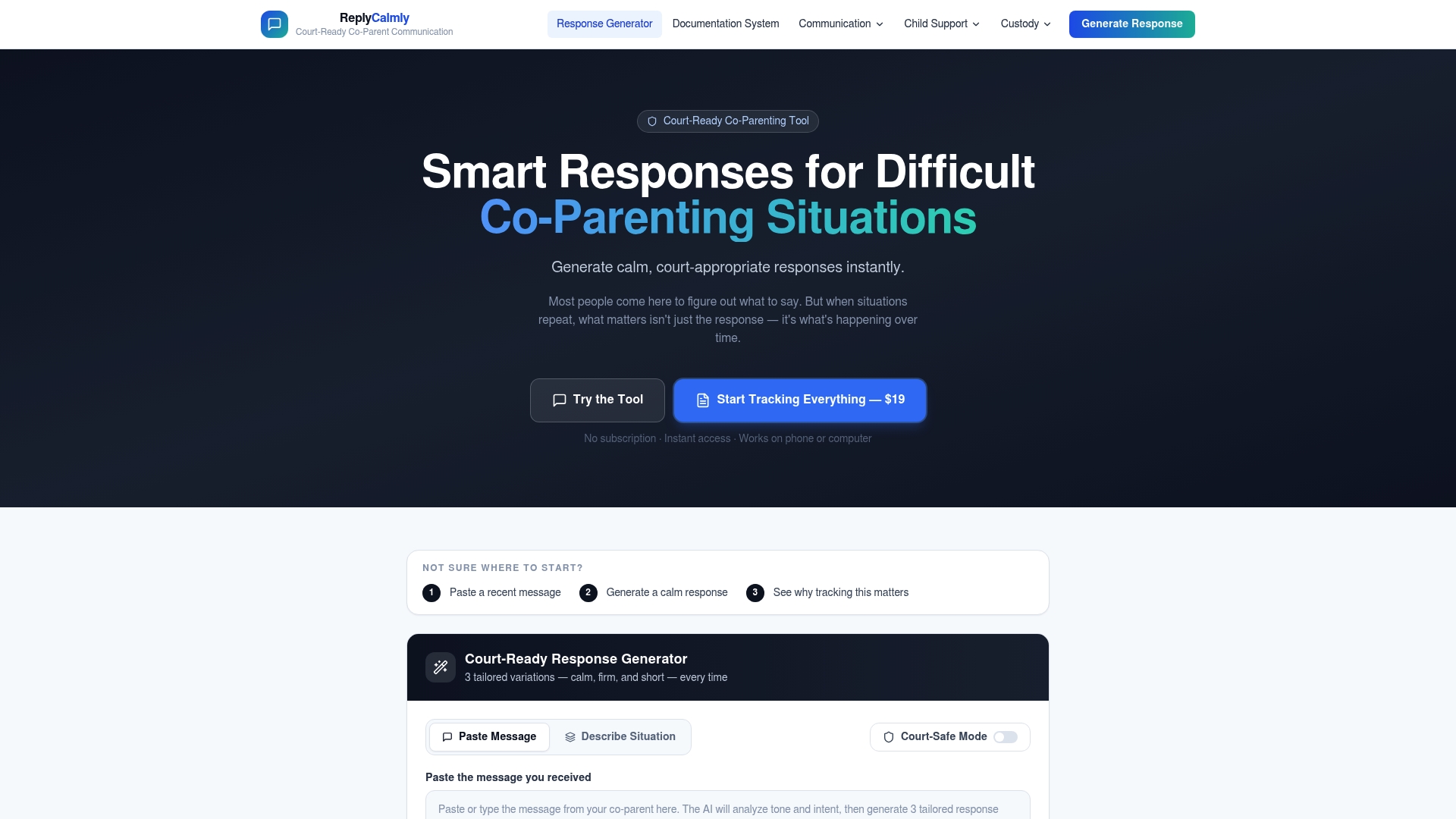
The free response generator produces calm, firm, and short variations for any difficult message you receive. Each variation applies BIFF principles automatically, so your reply stays factual and legally appropriate. Replycalmly also tracks communication patterns over time, categorizes incidents by type, and gives you a dashboard that makes your documentation clear and organized. For co-parents who need to build a reliable record for family court, that combination of structured messaging and incident tracking covers both sides of the problem. Visit Replycalmly to try the response generator at no cost.
FAQ
What is structured co-parenting support?
Structured co-parenting support is a professional, goal-oriented intervention that helps separated parents communicate effectively and manage parenting responsibilities through defined protocols, parenting plans, and conflict resolution frameworks focused entirely on the child's well-being.
How is co-parenting support different from couples therapy?
Co-parenting support focuses on building a functional parenting alliance and does not address the romantic relationship. Sessions are agenda-driven and child-centered, while couples therapy addresses emotional and relational dynamics between partners.
What is the BIFF method in co-parenting communication?
BIFF stands for Brief, Informative, Friendly, and Firm. Messages follow a 2–5 sentence format with no emotional commentary, making them legally appropriate and conflict-resistant.
When should a co-parent consider parallel parenting?
Parallel parenting is recommended when direct communication is unsafe or consistently escalates conflict. It limits contact to written-only exchanges and gives each parent independence within their own custody time.
Can structured co-parenting support reduce court involvement?
Structured support services help parents reach agreements with professional facilitation, which reduces the number of disputes that require court intervention and supports more stable custody arrangements over time.