
Parental gatekeeping is defined as the set of attitudes and behaviors by which one parent controls or influences the other parent's relationship with their child, either by encouraging involvement or restricting access. Recognized in family law and developmental psychology, gatekeeping operates on a spectrum from encouragement to restriction, making it one of the most consequential dynamics in any custody arrangement. If you are navigating a co-parenting situation, understanding where gatekeeping starts and where it crosses a legal line is not optional. It is the foundation of protecting both your child's wellbeing and your parental rights.
What is parental gatekeeping, and what forms does it take?
Parental gatekeeping is multidimensional. Research identifies three core factors: encouragement of the other parent's involvement, discouragement of that involvement, and control over shared decision-making. Each factor can tip toward healthy support or harmful restriction depending on the parent's motivations and behaviors.
Gate opening vs. gate closing
Gate opening describes behaviors that actively support the other parent's bond with the child. Examples include sharing school updates without being asked, speaking positively about the other parent in front of the child, and making schedule flexibility a default rather than a negotiation. Gate closing is the opposite. Negative gatekeeping behaviors include withholding information about medical appointments, making logistics deliberately difficult, disparaging the other parent to the child, and manipulating the child's feelings toward the absent parent. These behaviors are often linked to unresolved conflict or a desire for control rather than genuine concern for the child.

Subtle gatekeeping that goes unnoticed
Not all gatekeeping is obvious. A parent who "forgets" to pass along a school newsletter, who schedules activities during the other parent's time without notice, or who answers for the child during phone calls is practicing a quieter form of restriction. These patterns accumulate over time and carry real legal weight.
Pro Tip: Keep a dated log of every instance where information was withheld or access was complicated. Courts treat patterns of behavior as more credible evidence than isolated incidents.
| Gate opening behaviors | Gate closing behaviors |
|---|---|
| Sharing school and medical updates proactively | Withholding appointment information |
| Speaking positively about the other parent | Disparaging the other parent to the child |
| Encouraging phone calls and visits | Blocking or interrupting contact |
| Flexible scheduling when possible | Creating logistical obstacles to visitation |
| Including the other parent in decisions | Making unilateral decisions on shared matters |
How does parental gatekeeping affect children and co-parent relationships?
The effects of gatekeeping on children are well documented and serious. Children exposed to negative gatekeeping experience emotional distress, anxiety, loyalty conflicts, and long-term difficulty forming healthy relationships. The harm is not abstract. A child who hears one parent criticized constantly begins to internalize that criticism as a reflection of their own identity, since they are made of both parents.
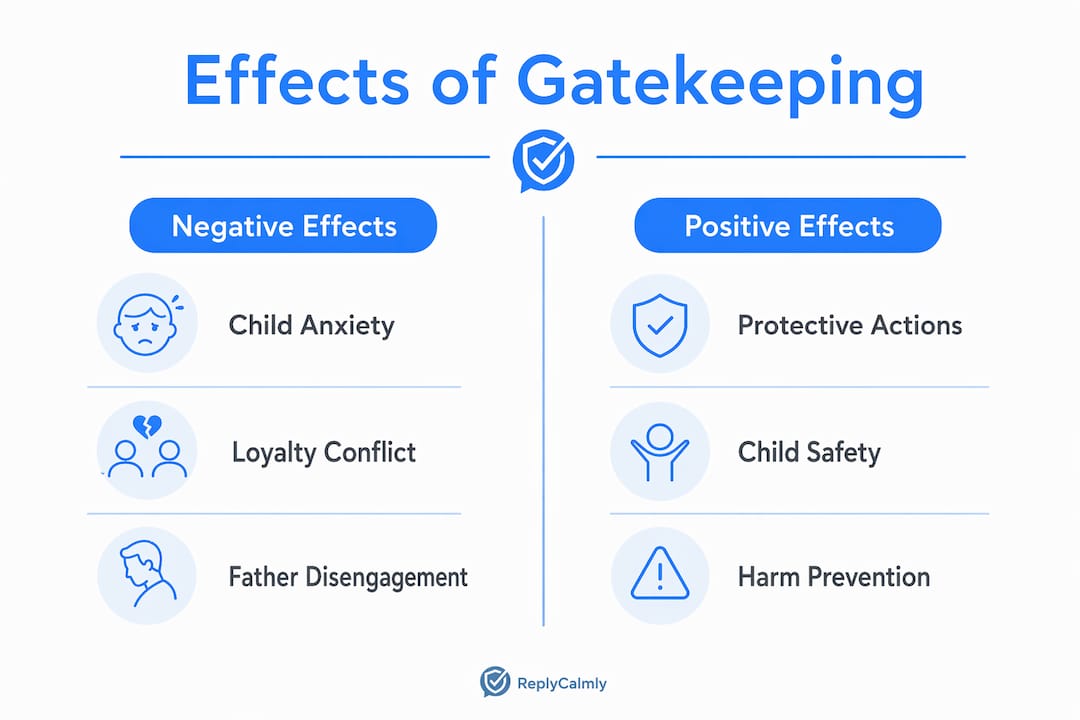
Father involvement takes a particularly direct hit. When gatekeeping restricts access, fathers disengage over time, not always out of indifference but because repeated obstruction makes sustained involvement feel impossible. That disengagement then gets misread as proof that the father was never committed, which reinforces the gatekeeping parent's justification. The cycle feeds itself.
Cultural and gender role pressures
Societal gender role expectations push many mothers to feel they must manage caregiving perfectly. That pressure can translate into controlling behaviors over a father's involvement, not out of malice but out of anxiety about doing it "right." Recognizing this dynamic does not excuse the behavior. It does explain why gatekeeping often starts subtly and escalates without the gatekeeper fully realizing what they are doing.
| Area affected | Impact of negative gatekeeping |
|---|---|
| Child emotional health | Anxiety, loyalty conflicts, and low self-esteem |
| Parent-child bonding | Weakened relationship with the restricted parent |
| Co-parent cooperation | Increased conflict and communication breakdown |
| Father involvement | Gradual disengagement due to repeated obstruction |
| Long-term child development | Difficulty forming healthy adult relationships |
Co-parenting cooperation suffers in proportion to how entrenched the gatekeeping becomes. Once communication breaks down, every exchange becomes a potential conflict, and the child absorbs that tension regardless of how carefully adults try to hide it.
What legal and practical considerations apply to gatekeeping in custody cases?
The law distinguishes between two very different types of gatekeeping. Protective gatekeeping is justified when a parent limits access because of documented harm, such as abuse, neglect, or substance use. Negative gatekeeping is driven by control, resentment, or unresolved conflict rather than any genuine safety concern. Courts treat this distinction as central to custody evaluations and parenting plan decisions.
Parental gatekeeping is recognized in custody disputes as a direct factor in determining the child's best interests. A parent who consistently obstructs the other parent's access risks losing custody or having their parenting time reduced. Courts do not view this as a technicality. They view it as evidence of that parent's willingness to prioritize the child's needs over personal grievances.
How to document gatekeeping for court
Effective documentation is the difference between a credible legal claim and an emotional argument. Follow these steps to build a solid record:
- Log every incident with a timestamp. Note the date, time, method of communication, and what was said or withheld.
- Save all written communication. Text messages, emails, and app messages are court-admissible. Detailed communication logs with timestamps and responses carry significant legal weight.
- Record missed or obstructed visits. Note when visitation was denied, delayed, or disrupted, and any reason given.
- Document the child's statements carefully. Write down what the child says without coaching or leading them.
- Consult a family law attorney early. An attorney can advise you on which documentation meets your jurisdiction's evidentiary standards.
Retaliatory gatekeeping is one of the most damaging mistakes a co-parent can make. Courts hold both parents accountable for conflict contributions, regardless of who started it. Withholding your child in response to the other parent's obstruction does not level the playing field. It gives the court a reason to question your judgment too.
Pro Tip: Use a court-approved communication platform for all co-parenting exchanges. These platforms timestamp messages automatically, making your documentation far more credible than screenshots from a personal phone.
How can co-parents reduce negative gatekeeping and build healthier dynamics?
Gatekeeping is bidirectional and nonlinear. Both parents' behaviors reinforce or de-escalate the cycle. Breaking it requires one parent to consciously adopt gate-opening behaviors, even when the other parent has not yet reciprocated. That is not weakness. It is the most effective strategy available.
Practical steps to reduce negative gatekeeping and support joint parenting:
- Share information proactively. Send school newsletters, medical summaries, and activity schedules without waiting to be asked.
- Use neutral language in all written communication. Emotional or accusatory messages escalate conflict and create a paper trail that works against you.
- Set clear, written boundaries. A boundary-setting message that is calm and specific is far more effective than a heated phone call.
- Stick to the parenting plan. Consistency builds trust and reduces the other parent's perceived need to control.
- Avoid discussing adult conflict in front of the child. Children who hear parental conflict directly are the most affected by gatekeeping dynamics.
- Use a co-parenting documentation tool. Apps that log communication and flag patterns give you objective data rather than subjective memory.
- Seek co-parenting counseling if conflict is entrenched. A neutral third party can interrupt cycles that two parents cannot break on their own.
Effective co-parenting habits protect children from the emotional fallout of adult conflict. The goal is not a perfect relationship with your co-parent. The goal is a functional one that keeps your child out of the middle.
Key Takeaways
Negative parental gatekeeping harms children's emotional development, weakens co-parent cooperation, and carries direct legal consequences in custody evaluations.
| Point | Details |
|---|---|
| Gatekeeping is a spectrum | Behaviors range from gate opening (encouragement) to gate closing (restriction), with control as a third dimension. |
| Children bear the real cost | Negative gatekeeping causes anxiety, loyalty conflicts, and long-term relationship difficulties in children. |
| Courts treat it seriously | Gatekeeping is a recognized factor in custody evaluations and can directly affect parenting plan outcomes. |
| Documentation is your defense | Timestamped logs of communication and missed visits are the most credible evidence in gatekeeping disputes. |
| Gate opening breaks the cycle | One parent adopting supportive behaviors can interrupt the bidirectional cycle of conflict and restriction. |
The part nobody talks about: gatekeeping goes both ways
Most articles on parental gatekeeping frame it as something one parent does to the other. What I have seen, working with co-parents in high-conflict situations, is that both parents are often gatekeeping simultaneously, each convinced the other started it.
The parent who withholds the school schedule believes they are responding to being excluded from decisions. The parent who makes drop-offs difficult believes they are protecting the child from instability. Both are wrong, and both are causing harm. The bidirectional nature of this dynamic is the most important thing to understand, because it means you have more power to change it than you think.
Viewing co-parenting as teamwork rather than competition is not a feel-good platitude. It is the only framework that actually works. When one parent commits to gate-opening behaviors consistently, the other parent's need to control typically decreases over time. That is not guaranteed, but it is the pattern the research supports.
The hardest part is going first. If you are the parent being restricted, adopting gate-opening behaviors feels unfair. You are right that it is unfair. Do it anyway, and document everything while you do. That combination, generosity in behavior and precision in documentation, is the most legally and emotionally sound position you can hold.
If the other parent's gatekeeping crosses into legally actionable territory, your documented record of good-faith cooperation will matter enormously to a judge.
— Devin
Replycalmly tools for co-parents facing gatekeeping
Co-parents dealing with gatekeeping need two things: calm, court-safe communication and a reliable record of what happened and when. Replycalmly is built for exactly that.
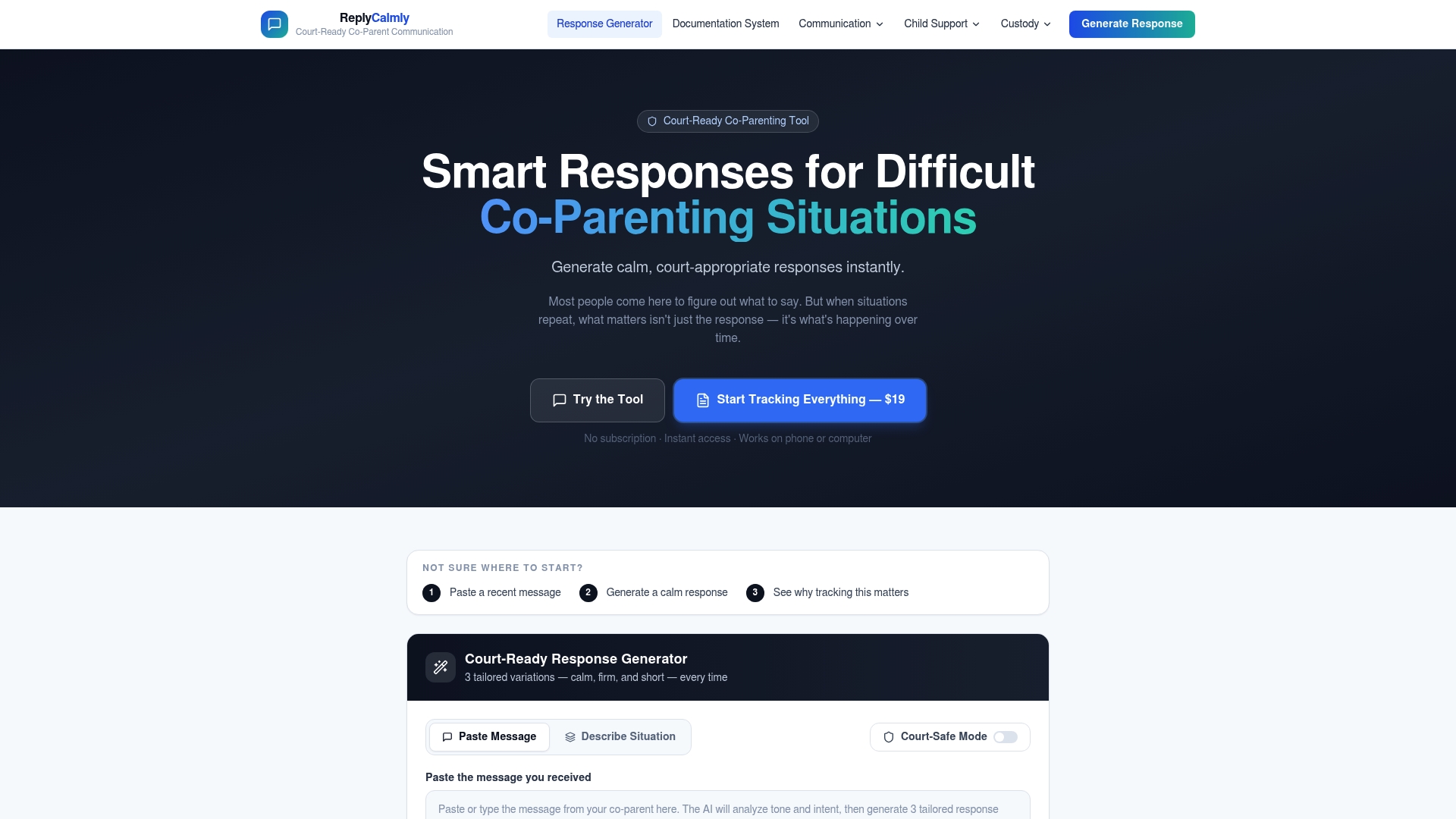
The co-parent response generator produces calm, firm, and short response options for difficult messages, so you never have to choose between saying nothing and saying something you will regret. The platform also logs incidents by category, including custody conflicts and manipulation patterns, and visualizes them over time. For parents building a documentation record, the best co-parenting apps for documentation guide on Replycalmly covers which tools hold up in court and why.
FAQ
What is the definition of parental gatekeeping?
Parental gatekeeping is a set of behaviors by which one parent controls or influences the other parent's access to and relationship with their child. It operates on a spectrum from gate opening (encouraging involvement) to gate closing (restricting access), with control over decision-making as a third dimension.
Is parental gatekeeping always harmful?
No. Protective gatekeeping, which limits access based on documented harm such as abuse or neglect, is legally justified and child-centered. Negative gatekeeping driven by control or resentment is the harmful form, and courts treat the two very differently in custody evaluations.
How does gatekeeping affect a child's development?
Children exposed to negative gatekeeping face anxiety, loyalty conflicts, and difficulty forming healthy relationships later in life. The emotional impact is compounded when the child hears one parent criticized by the other.
Can gatekeeping affect my custody arrangement?
Yes. Courts recognize parental gatekeeping as a direct factor in determining the child's best interests. A parent who consistently obstructs the other parent's access risks losing custody or having their parenting time reduced.
What is the most effective way to document gatekeeping?
Log every incident with a date, time, communication method, and outcome. Save all written exchanges on a timestamped platform. Courts treat detailed, consistent documentation as significantly more credible than verbal accounts or informal screenshots.