
Neutrality in co-parenting is defined as maintaining emotional and communicative balance that keeps the child's well-being at the center of every decision. Knowing why remain neutral in co-parenting matters is not abstract advice. Research confirms that ongoing conflict causes the most significant long-term psychological damage to children in separated families. Neutrality is not indifference, and it is not weakness. It is a deliberate, protective choice that shields children from adult conflict while giving both parents a functional path forward.
Why remain neutral in co-parenting?
Neutrality in co-parenting means shifting dynamics from competition to cooperation focused on the child's best interests. That distinction matters because many co-parents confuse staying neutral with staying silent or accepting bad behavior. The two are not the same. Neutrality means you respond to what affects your child, and you do so without letting anger, resentment, or fear drive the conversation.
The psychological case for neutrality is clear. Children who grow up watching their parents fight suffer measurable harm to their emotional development, academic performance, and long-term relationships. Choosing neutrality removes the child from the crossfire. It also creates a more predictable environment, which is exactly what children need to build resilience during a family transition.

Neutrality also protects you legally. Every message you send is a potential exhibit in a custody proceeding. A calm, child-focused record of communication signals to a court that you prioritize your child's stability over personal grievances. That signal carries real weight.
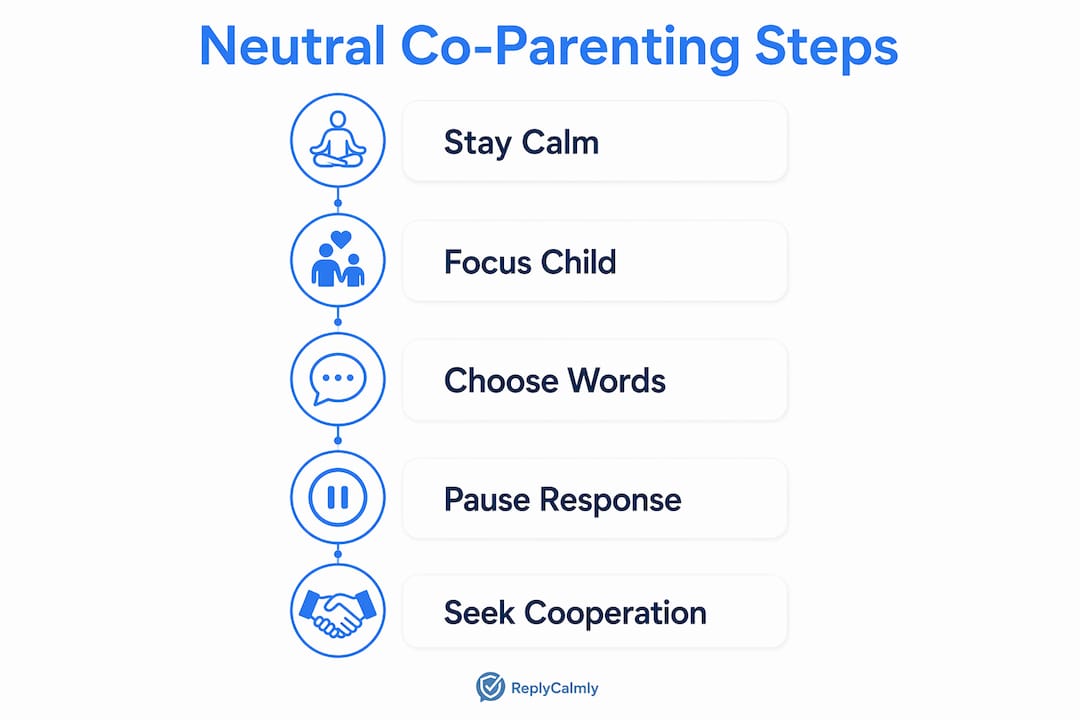
What does remaining neutral in co-parenting involve?
Neutral co-parenting is built on specific behaviors, not vague intentions. The practices below define what it looks like in daily life.
- Written communication for non-urgent matters. Shifting non-urgent messages to written channels like email or a dedicated app removes the emotional heat of real-time conversation. It also creates an objective record. For urgent situations, call first, then follow up in writing.
- The "stop, look, and listen" method. This emotional regulation technique prompts you to pause before reacting. It engages your thinking brain instead of your fight-or-flight response. Even a 60-second pause before typing a reply can change the entire tone of an exchange.
- Clear boundaries and parenting plan adherence. Sticking to the agreed schedule is itself a neutral act. It removes ambiguity and reduces the number of decisions that can become arguments.
- No children as messengers. Using your child to relay information to the other parent puts them in an impossible position. All communication goes directly between adults, always.
- Child-focused language only. Every message you send should pass one test: does this relate to my child's needs? If it does not, it does not get sent.
Pro Tip: Before sending any message to your co-parent, read it aloud and ask yourself: "Would I be comfortable if a judge read this?" If the answer is no, rewrite it.
How does neutrality benefit children and reduce family stress?
The evidence on this point is direct. Cooperative co-parenting produces the best outcomes for children, but even parallel parenting that reduces conflict outperforms arrangements that are nominally cooperative but quietly hostile. The quality of the relationship between parents matters more than the legal structure of custody.
"Children benefit from consistency and reassurance, which build resilience during family transitions. Healthy co-parenting involves minimizing criticism of the other parent and avoiding putting children in the middle." — Psychology Today
Emotional stability is the core benefit. When children see their parents communicate calmly, they learn that conflict is manageable. When they see the opposite, they internalize anxiety and learn that relationships are inherently volatile. The effective coparenting habits you model now become the emotional templates your child carries into adulthood.
Stress reduction for the adults is equally real. High-conflict communication is exhausting. Every hostile exchange costs you mental energy that could go toward your child, your work, or your own recovery. Neutral communication lowers the emotional temperature of the entire co-parenting relationship over time. That is not a small benefit. It is the difference between a co-parenting arrangement that grinds you down and one that becomes manageable.
How to maintain neutrality in a high-conflict co-parenting relationship
Maintaining neutrality when the other parent is actively hostile requires a concrete system, not just good intentions. These steps build that system.
-
Choose a structured communication channel and stick to it. Pick one platform for all co-parenting communication and set clear expectations for response times. A 24-hour window for non-urgent messages removes the pressure to respond emotionally in the moment. Documenting co-parenting messages through a dedicated channel also builds your legal record automatically.
-
Use an emotional regulation checklist before responding. Before you reply to any difficult message, run through a short internal check: Am I calm? Is this response about my child? Will this escalate or de-escalate? The emotional regulation checklist approach gives you a repeatable process instead of relying on willpower alone.
-
Define flexibility clearly and limit it. Flexibility in parenting plans should be well-defined and limited. Agreeing to swap weekends occasionally is reasonable. Becoming an on-call backup parent with no boundaries is not. Vague flexibility creates conflict. Written, specific agreements prevent it.
-
Redirect every off-topic message. When a co-parent sends a message that is about adult grievances rather than the child, do not engage with the grievance. Acknowledge receipt and redirect: "I received your message. For anything related to [child's name], I'm happy to discuss." That response is neutral, firm, and legally sound.
-
Limit communication to child-related topics only. Clear boundaries protect both parents and children from conflict spillover. Discussions about finances, past relationship issues, or personal grievances have no place in co-parenting communication.
Pro Tip: If you receive a message that triggers a strong emotional reaction, draft your response and wait at least two hours before sending it. Most of the time, you will rewrite it.
How does neutral co-parenting compare to other parenting models?
Co-parenting exists on a spectrum. Understanding where neutrality fits helps you choose the right approach for your situation.
| Model | Communication style | Conflict level | Best for |
|---|---|---|---|
| Cooperative co-parenting | Open, frequent, flexible | Low | Amicable separations with mutual trust |
| Neutral co-parenting | Structured, child-focused, limited | Moderate | Situations with some tension but functional communication |
| Parallel parenting | Minimal, formal, written only | High | High-conflict situations where direct contact escalates conflict |
Cooperative co-parenting works best when both parents can communicate without hostility. Neutral co-parenting is the practical middle ground: structured enough to prevent escalation, flexible enough to handle real parenting decisions. Parallel parenting goes further by minimizing direct contact almost entirely, which is the right call when any interaction becomes a trigger.
The key insight is that neutrality is not a permanent compromise. For many co-parents in high-conflict situations, starting with a neutral model creates the conditions for eventually moving toward more cooperative communication. It reduces the emotional charge of every interaction, which gradually lowers the overall conflict level. That progression is realistic and well-documented in family court research.
Choosing the right model is not about pride. It is about what actually protects your child right now. A parallel parenting approach may feel like a step back from the cooperative ideal, but it is a step forward for your child's stability.
Key Takeaways
Remaining neutral in co-parenting is the most direct way to protect your child's emotional health and build a legally defensible communication record.
| Point | Details |
|---|---|
| Neutrality protects children | Reducing parental conflict is the single biggest factor in children's long-term psychological health. |
| Written communication is the foundation | Moving non-urgent messages to written channels removes emotional heat and creates an objective record. |
| Emotional regulation is a skill | Techniques like "stop, look, and listen" give you a repeatable process for responding calmly under pressure. |
| Defined flexibility prevents conflict | Vague agreements create arguments; specific, written flexibility terms prevent them. |
| Neutrality is a legal asset | Calm, child-focused communication signals to courts that you prioritize your child's stability. |
Neutrality is the strongest move you can make
After working with co-parents in high-conflict situations, the pattern I see most often is this: the parent who stays neutral consistently wins, both in court and in their child's life. Not because they are passive. Because they are disciplined.
The biggest misconception I encounter is that staying neutral means letting the other parent walk all over you. It does not. Neutrality is a strategic choice that keeps your focus on what actually matters: your child's security. Every time you respond calmly to a hostile message, you are demonstrating self-control that the other parent is not. That contrast builds over time, and courts notice it.
The co-parents who struggle most are the ones who treat every message as a battle to win. They exhaust themselves, they expose their children to more conflict, and they hand the other parent ammunition. Neutrality removes all of that. It is not about being the bigger person in some abstract moral sense. It is about being the smarter parent in a very practical one.
Emotional regulation is not a personality trait you either have or do not. It is a skill you build with the right tools and practice. The co-parents I have seen make the most progress are the ones who stop relying on willpower and start using systems: structured channels, response templates, and clear rules for what they will and will not engage with.
— Devin
Replycalmly makes neutral communication easier
Staying neutral under pressure is hard when you are reading a message that makes your blood boil. Replycalmly is built for exactly that moment.
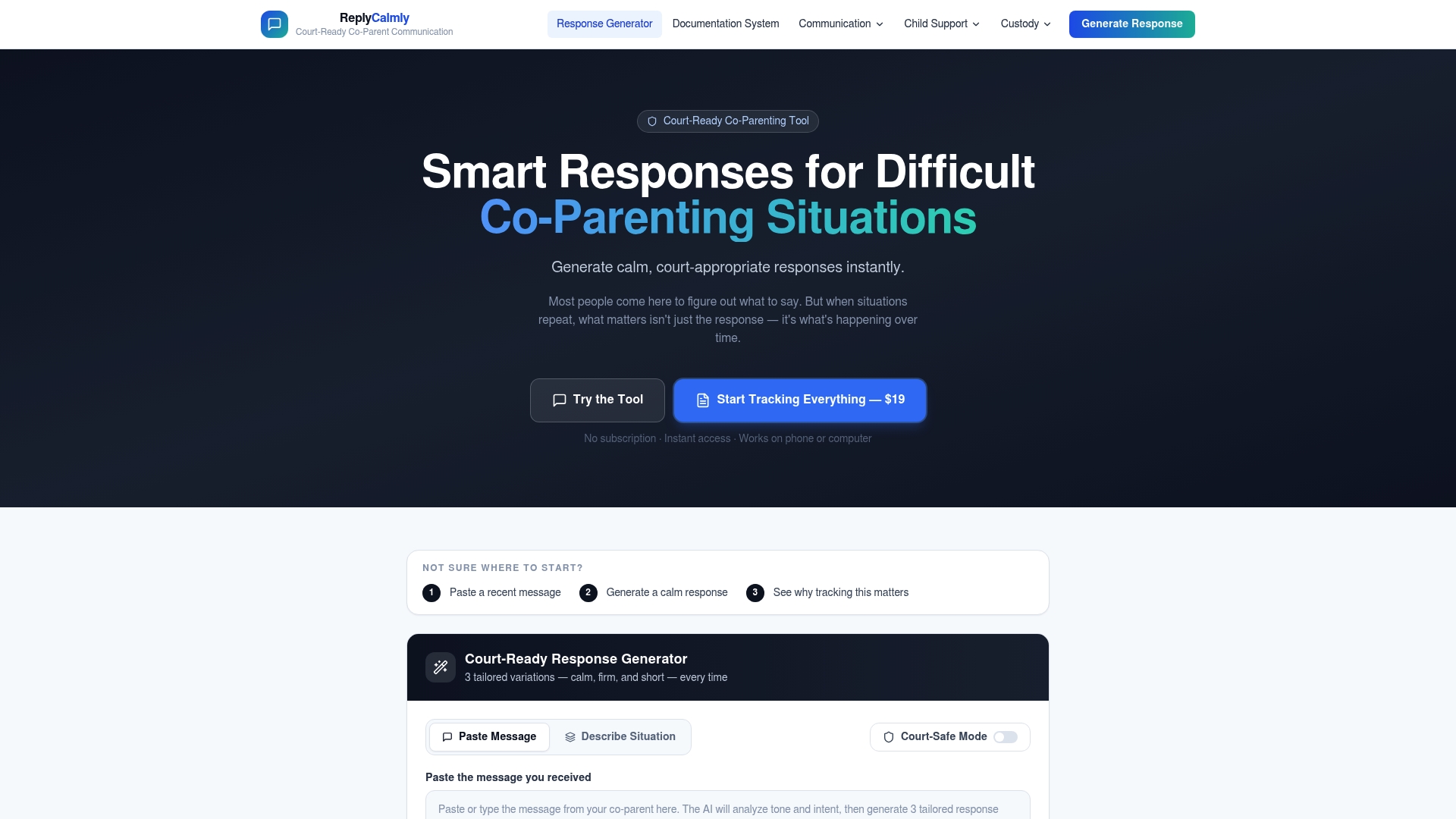
The platform's co-parent response generator takes the message you received and produces multiple reply options: calm, firm, and short. You choose the tone that fits the situation. Every response is child-focused, legally appropriate, and free of the emotional language that escalates conflict. Replycalmly also tracks communication patterns over time, so you build a documented record without any extra effort. If you are navigating a high-conflict situation, that record matters. Try the free response generator at Replycalmly and see how much easier neutral communication becomes when you have a system behind you.
FAQ
What does neutrality in co-parenting actually mean?
Neutrality in co-parenting means communicating and making decisions based on the child's best interests, without letting personal conflict with the other parent drive your responses. It is not indifference. It is deliberate, child-focused communication.
Why is staying neutral so hard in high-conflict situations?
High-conflict co-parenting triggers the fight-or-flight response, which makes calm communication feel unnatural. Emotional regulation techniques like pausing before responding help override that impulse and shift you into a more deliberate mode.
Does neutrality mean I have to agree with everything the other parent says?
No. Neutrality means keeping your communication child-focused and free of personal attacks. You can disagree firmly while still communicating in a calm, structured way that protects your child and your legal standing.
How does neutral co-parenting help my custody case?
Courts assess the communication records of both parents. Calm, child-focused messages demonstrate that you prioritize your child's stability. Hostile or emotionally charged messages do the opposite. Neutral responses protect your custody position over time.
When should I switch from neutral to parallel co-parenting?
Parallel parenting is the right choice when any direct communication with the other parent escalates into conflict, regardless of your efforts to stay neutral. It minimizes contact while maintaining structure, which protects both you and your child.