
Yes, spoliation of evidence in family court is actionable, and judges treat it seriously. Destroying, altering, or failing to preserve relevant texts, photos, or financial records can trigger adverse inference rulings, evidence exclusion, monetary fines, or contempt findings. The duty to preserve often attaches well before you file anything, the moment litigation becomes reasonably foreseeable, which means the damage can already be done by the time a case officially starts.
TL;DR:
- Evidence destruction in family court, including deleting texts or wiping devices, can lead to sanctions such as adverse inferences, evidence exclusion, or contempt charges.
- The duty to preserve relevant evidence begins as soon as reasonable anticipation of litigation arises, often before formal case filings or separation.
- Courts base sanctions on intent, prejudice, timing, and effort to mitigate damage, with worst cases risking default judgments or credibility damage.
- Successful spoliation claims depend on controlling evidence, relevance, and timing, supported by a clear preservation timeline and expert forensic analysis.
- Parents should immediately secure and document digital evidence, send preservation letters, and consider professional forensic help if evidence destruction is suspected.
Table of Contents
- What Counts as Spoliation of Evidence in Family Court
- When Your Duty to Preserve Evidence Kicks In
- Sanctions Courts Actually Impose for Spoliation
- Proving Spoliation: What a Motion Actually Needs
- Best Practices for Preserving Digital Evidence
- Your Court-Ready Evidence Checklist
- Real Cases Where Missing Evidence Changed the Outcome
- Why Calm, Documented Communication Matters More Than People Think
- Turning Documentation Into a Habit, Not a Crisis Response
- Where to Go Deeper on Spoliation Law
- Sources
What Counts as Spoliation of Evidence in Family Court
Spoliation means the destruction, significant alteration, or failure to preserve evidence that's relevant to a case that's pending or reasonably anticipated. In family court, that definition covers everything from a deleted text thread to a wiped phone handed over "for a fresh start" right before a custody hearing.
The legal analysis gets more complicated with electronically stored information, or ESI, than with paper records. A printed bank statement is what it is. A text message thread is not just words on a screen. It carries metadata, timestamps, sender and delivery data, and often a server-side copy that exists independently of the phone in your hand. Courts increasingly expect native files over screenshots because a screenshot can be cropped, staged, or taken out of context, while native data carries a digital fingerprint that's much harder to fake convincingly.
That distinction matters more than most parents realize going into a dispute. A screenshot of a threatening text proves almost nothing on its own if the other parent claims it was edited. The native message store, with its metadata intact, is a different animal entirely.
Common spoliation patterns in family cases include:
- Deleting text or app message threads after a conflict escalates
- Factory-resetting a phone before a discovery request or forensic exam
- "Losing" financial documents relevant to support or asset division
- Failing to preserve voicemails or call logs cited in a custody complaint
- Wiping a shared cloud account or removing a co-parenting app history
None of these acts require malicious intent to create legal exposure. Careless handling of relevant records can produce the same sanctions as intentional destruction, depending on what the other side can show about your state of mind.
When Your Duty to Preserve Evidence Kicks In
The preservation duty doesn't wait for a judge's signature on a filing. It attaches the moment a party knows, or reasonably should know, that litigation is likely, a standard courts describe as reasonably anticipated litigation. In a custody dispute, that trigger point often arrives earlier than people expect.
Separation itself can start the clock, especially when it's contentious. So can the moment you hire an attorney, receive a preservation letter, or even have a heated conversation where custody gets mentioned as a real possibility. Courts look at constructive notice, meaning what a reasonable person in your position should have understood, not just formal case filings.
Typical triggers that establish notice include:
- Physical separation or one parent moving out under contested circumstances
- Contact from opposing counsel, even an informal email
- Receipt of a formal preservation letter
- Filing or being served with a petition, motion, or complaint
- Any documented statement expressing intent to pursue custody or divorce action
Jurisdictional variation matters here. Family court rules differ state to state, and some states borrow heavily from federal evidence standards while others apply their own common-law spoliation doctrines. Rule 37(e) of the Federal Rules of Civil Procedure provides the leading federal framework for ESI specifically, and many state courts look to it for guidance even in matters that never touch federal court. It's worth checking how your state's family court has handled digital spoliation claims, since the remedies available can shift significantly based on local precedent.
Sanctions Courts Actually Impose for Spoliation
Family court judges have a full toolbox of sanctions, and they calibrate the response to how bad the conduct was. Here's the rough escalation, from mildest to most severe:
- Adverse inference instruction. The judge tells the fact finder to assume the destroyed evidence would have hurt the party who destroyed it.
- Evidence exclusion. The offending party loses the ability to introduce certain evidence or testimony related to what was destroyed.
- Monetary sanctions. Courts can order the spoliating party to cover the other side's forensic or legal costs tied to the loss.
- Striking pleadings. In severe cases, a judge can strike claims or defenses connected to the destroyed evidence.
- Contempt or default judgment. The most extreme remedy, reserved for willful, bad-faith destruction that leaves the other party with no meaningful way to prove their case.
Judges weigh several factors before picking a sanction. Intent and culpability matter most: did the parent delete a thread by accident during a routine phone upgrade, or wipe a device the night before a scheduled forensic exam? Sanctions calibration in matrimonial cases also depends on prejudice to the other side, meaning how much the missing evidence actually hurt their ability to present their case, along with the timing and scope of what was lost and whether the offending party made any good-faith effort to remedy the damage.
The consequences don't stop at formal sanctions, either. A parent caught destroying evidence takes a credibility hit that follows them through the rest of the case. Once a judge concludes someone manipulated or destroyed records, skepticism tends to spread to that parent's other testimony, even on unrelated issues. In custody disputes, where judges are constantly assessing which parent is more credible and cooperative, that kind of reputational damage can shape outcomes far beyond the specific evidence that went missing.
Proving Spoliation: What a Motion Actually Needs
Winning a spoliation motion requires three elements, and skipping any one of them sinks the argument. You need to show the other party had control over the evidence, that the evidence was relevant to the case, and that a duty to preserve existed at the time it was destroyed.
Control seems obvious but trips people up constantly. If the evidence lived on a shared family computer or a joint cloud account, control can get murky fast, and the other side will argue they never had exclusive access. Relevance is usually the easiest element, since most disputed evidence in custody cases relates directly to parenting conduct or communication patterns. Duty is where timing fights happen, because the other party will argue litigation wasn't yet foreseeable when the deletion occurred.
The exhibits that make a spoliation motion land with a judge tend to share a few traits:
- A clear preservation-letter timeline showing exactly when notice was given and what happened afterward
- Cross-source corroboration, like carrier records or cloud backup logs that contradict a claim that data simply "disappeared"
- A forensic comparison image showing what existed before and after the alleged destruction
- An expert affidavit explaining, in plain terms, what the forensic analysis found and why it matters
Practitioners who build these motions for a living consistently point to the combination of a solid timeline exhibit plus an expert affidavit as the strongest one two punch, because judges want independent verification, not just a parent's word against another's.
Pro Tip: Don't wait for a hearing date to start building your timeline. Log the date you sent a preservation letter, the date you noticed something was missing, and the date you flagged it to counsel, all in writing, as you go. A timeline assembled in real time is far more convincing than one reconstructed from memory months later.
Expect the other side to argue accidental loss, normal device turnover, or app-based auto-deletion settings they claim they didn't control. Anticipating those defenses before filing makes your motion sharper and harder to dismiss.
Best Practices for Preserving Digital Evidence
Digital evidence is fragile in ways paper never was, and the biggest mistake most parents make is trying to "save" a text thread by scrolling through it and snapping screenshots on their own phone. That instinct, while understandable, can actually alter metadata and undermine authenticity if the file's origin is ever challenged.
The Scientific Working Group on Digital Evidence lays out a set of standards worth understanding even if you're not a forensic examiner yourself. Three concepts matter most for parents navigating a custody case:
- Hashing creates a unique digital signature for a file, so anyone can later verify the copy in court matches the original byte for byte.
- Native exports preserve the underlying data structure, timestamps, and metadata that a screenshot simply cannot capture.
- Chain of custody documents exactly who handled the evidence, when, and how, which matters enormously if authenticity ever gets challenged.
"Live" collection, meaning opening an app or scrolling through a device to look at something, can quietly alter access timestamps and other metadata even when you don't touch the content itself. That's part of why forensic examiners use write-blocking tools and imaging software rather than just browsing a phone directly.
Immediate action steps if you suspect the other parent might destroy relevant evidence, or if you're worried about protecting your own records:
- Stop any deletions or app cleanups on your own devices immediately, even routine ones
- Request that service providers (carriers, app companies, cloud services) preserve account data before it auto-purges
- Send a written preservation letter to the other party or their counsel, dated and specific about what you're asking them to retain
- Make forensically sound copies where you can, rather than relying on manual screenshots alone
A preservation letter served early and documented properly is often the single strongest prophylactic move available to a parent, because it establishes clear notice and makes it much harder for the other side to later claim they didn't know litigation was coming.
When should you call in a forensic examiner instead of handling it yourself? If the stakes involve a contested custody determination, a large asset dispute, or evidence you suspect was deliberately altered, professional help pays for itself. A qualified examiner typically delivers a written report, a sworn affidavit suitable for court, and testimony availability if the case goes to hearing. Costs vary by scope and region, but budget for a real engagement rather than a quick phone scan, since the value comes from the documentation trail as much as the technical recovery.
Your Court-Ready Evidence Checklist
Preserving evidence doesn't require a law degree, but it does require discipline and consistency starting the moment you sense a dispute is coming. Here's a practical sequence to follow:
- Stop altering anything. Freeze your own deletion habits, app cleanups, and device resets the moment you anticipate a custody dispute.
- Secure your devices. Back up phones and computers to a separate, dated storage location you control.
- Take dated, contextual screenshots. Capture the full thread, timestamps, and surrounding messages, not just the one damaging line.
- Export native files where the platform allows it. Many messaging apps and co-parenting tools let you export a full conversation history rather than relying on screen captures.
- Build a running evidence index. Log every incident with a date, description, and where the underlying file is stored.
- Draft a preservation letter if you anticipate the other side might delete something. State clearly and specifically what you're asking them to retain.
- Bring in counsel early if the stakes are high. An attorney can formalize a preservation letter and request provider-level holds that carry more legal weight than an informal request.
Keep a simple documentation folder with a few core categories: dated screenshots with surrounding context, exported native files where available, a written timeline of incidents, and a short evidence index describing what each item is and where it came from. Parents managing this over months or years benefit from resources like this guide to organizing custody records, which walks through building a filing structure that holds up under scrutiny rather than becoming a disorganized pile of screenshots. For a broader look at what to collect in the first place, this rundown on evidence-based custody covers the categories that matter most to family court judges specifically.
Real Cases Where Missing Evidence Changed the Outcome
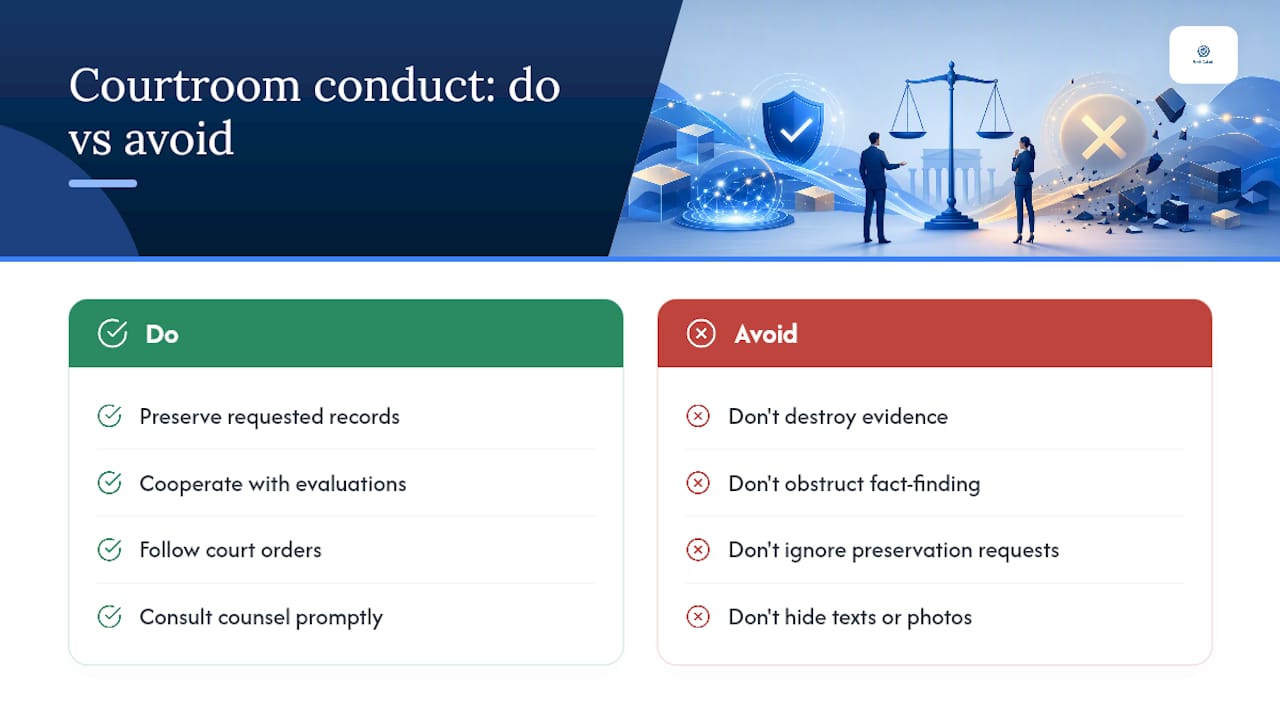
Family court opinions on spoliation rarely make headlines, but they carry real weight for the parents living through them. A useful example comes from Arizona, where an appellate court addressed a situation involving a parent's refusal to cooperate fully with a court-ordered evaluation process. The Kelly v. Kelly opinion illustrates how courts respond when a party's conduct undermines the fact-finding process the case depends on, including consequences that reach directly into custody determinations.
The pattern that shows up across these opinions is consistent: when a parent's conduct blocks the court from getting a full picture, whether through destroyed records or refusal to preserve requested information, judges don't just shrug it off. They treat it as interference with the process itself, and the sanction often lands exactly where it hurts most, in the custody outcome.
Judges walk a genuine balancing act in these cases. Sanctioning a parent too aggressively risks harming a child's best interests if it removes a fit parent from meaningful involvement in the child's life. But letting spoliation slide entirely rewards bad conduct and punishes the parent who played by the rules. [azcourts.gov] That's why courts tend to calibrate sanctions carefully rather than reaching for the harshest option automatically, reserving default judgments and pleading strikes for genuinely willful conduct.
The practical reminder for any parent watching this unfold: evidence exclusion isn't just a technical courtroom loss. When a judge won't let you introduce the texts, photos, or records that would have supported your parenting time request, that gap in the record can directly shape the custody schedule you end up living with for years.
Why Calm, Documented Communication Matters More Than People Think
Most spoliation problems don't start with a plan to destroy evidence. They start with a parent panicking after sending or receiving an ugly message, then deleting it out of embarrassment or anger rather than malice. That impulse is understandable and still legally dangerous.
The fix isn't complicated, even if it's hard to execute in the moment: keep your own communication calm and consistent enough that you never feel the urge to erase it later. Replycalmly builds tools around exactly that instinct, generating calm, firm, or short response variations so a co-parent can reply to a difficult message without escalating into something they'll wish they could take back. A tracking system that logs incidents, tags issues like custody conflicts or false accusations, and visualizes patterns over time also does double duty as a preservation habit, since organized records rarely go missing the way scattered screenshots do.
— Reply Calmly Team
Turning Documentation Into a Habit, Not a Crisis Response
Waiting until a custody dispute is already underway to think about evidence preservation puts you behind before you start. Replycalmly exists for the parents who'd rather build a clean record from day one than scramble to reconstruct one after a judge starts asking pointed questions.
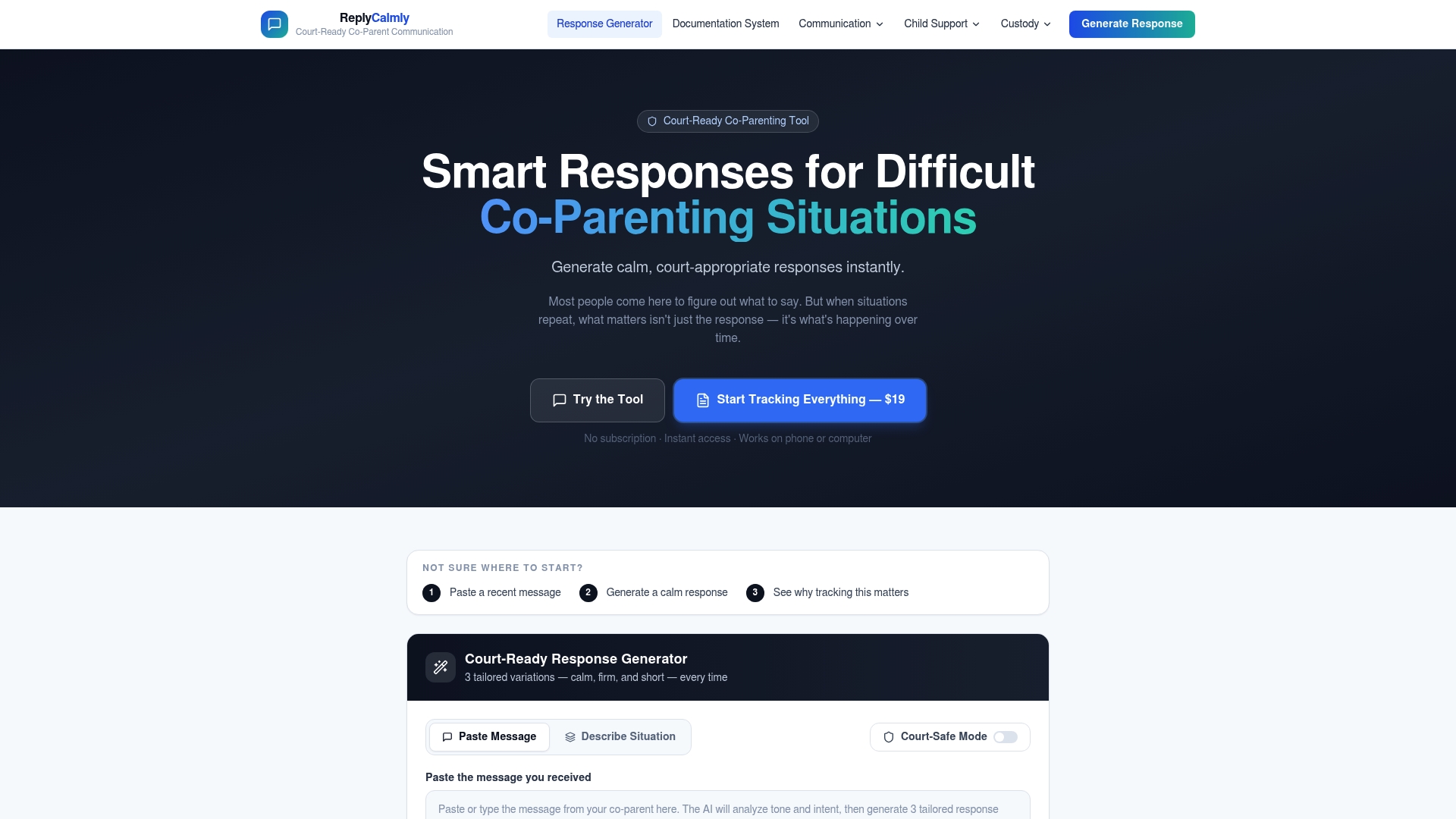
The free co-parent response generator lets you paste in a difficult message and get back a calm, firm, or short reply option in seconds, so you're never composing an angry text at 11 p.m. that you'll want to delete by morning. Subscription services often add incident tracking with category tagging, evidence attachments, pattern dashboards, and court-ready report generation to help with organized documentation. These tools do not replace court-mandated communication platforms but can work alongside them, adding structure to communications that fall outside those systems.
If you're already juggling screenshots, half-finished timelines, and a growing sense that you need something more organized before your next hearing, the best co-parenting apps for documentation page breaks down exactly how the tracking and reporting features work. Start the free trial and see whether a structured system changes how confident you feel walking into your next filing.
Where to Go Deeper on Spoliation Law
- Federal Rule of Civil Procedure 37(e) for the federal ESI sanctions framework
- SWGDE's digital evidence best practices for preservation and collection standards
- Kelly v. Kelly as a representative family-court opinion on evidence and custody consequences
- Editable document retention policy templates for building your own preservation letter
Consult a family law attorney licensed in your state, since spoliation remedies and preservation timelines vary by jurisdiction.
Sources
- Spoliation: scope, elements and sanctions (Cozen analysis)
- Federal Rule of Civil Procedure 37(e)
- Best practices for digital evidence acquisition, preservation, and analysis from cloud service providers (SWGDE, 2025)
- Law
- Kelly v. Kelly — Arizona Court of Appeals opinion